The Iberian orcas: who they are and why they interact with sailboats
There are only a few dozen of them, they live between the Strait of Gibraltar and the Bay of Biscay and since 2020 they have been interacting with the rudders of sailing boats. We review what is known —and what is not— about this unique population.
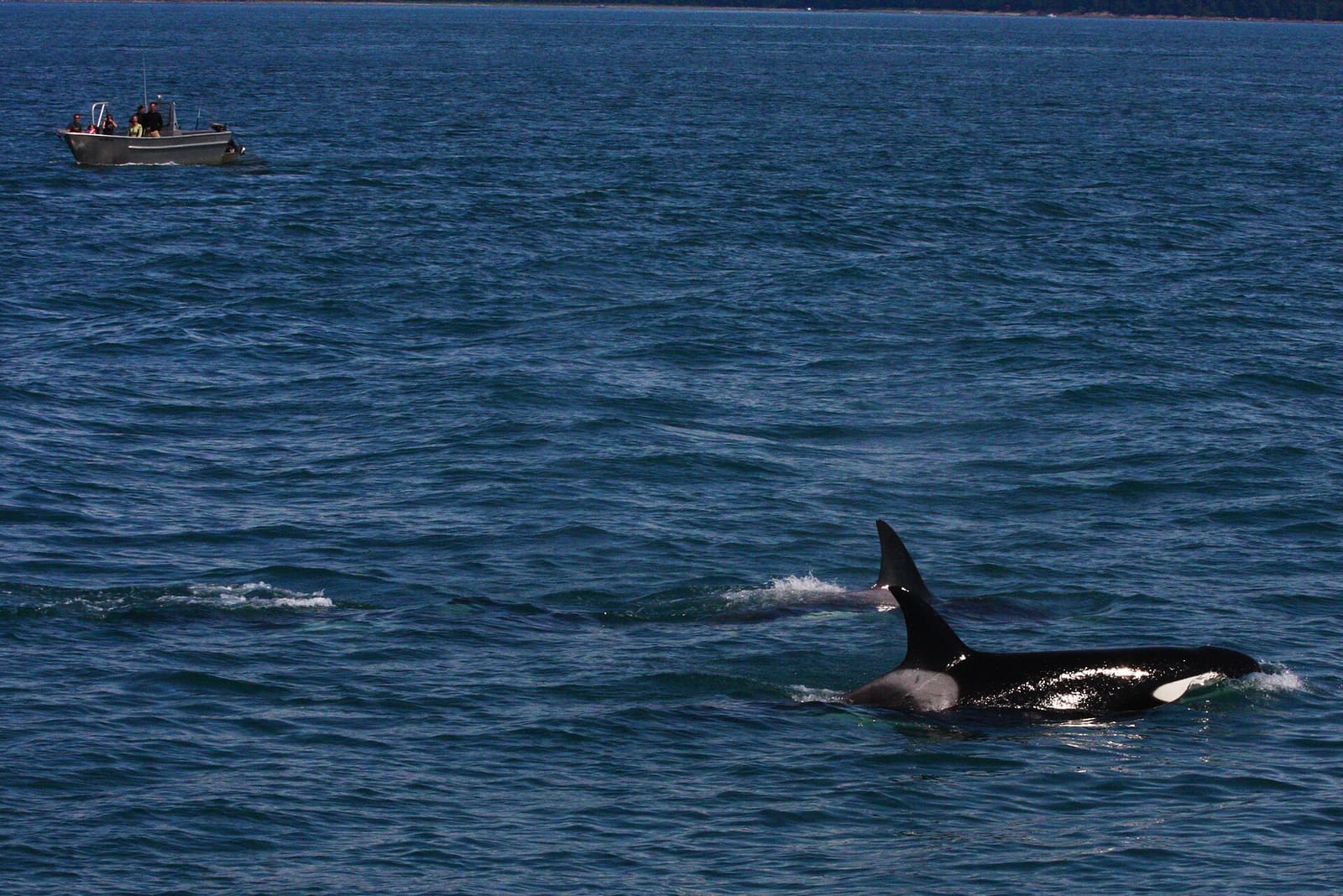
Since the summer of 2020, an unprecedented phenomenon has filled headlines in Spain and Portugal: orcas approaching sailboats and pushing, biting or ramming their rudders, sometimes until they break. The footage went viral and all kinds of theories emerged, from “revenge” to a supposed “rebellion”. Science offers a more cautious explanation.
A small and unique population
The protagonists belong to the Iberian orca subpopulation (Orcinus orca), a group of a few dozen individuals living between the Strait of Gibraltar and the coasts of Portugal, Galicia and the Bay of Biscay. It is assessed as Critically Endangered at regional level by the IUCN, and in Spain it is listed in the Spanish Catalogue of Threatened Species.
Its diet is highly specialised in Atlantic bluefin tuna, which it follows on its migration: in the Strait in spring and summer, and further north later on.
What happens with the sailboats
The interactions mostly involve sailing boats, usually moving at moderate speed. The orcas approach from the stern and focus on the rudder. Researchers from the Atlantic Orca Working Group (GTOA) have found that only a small number of animals take part, many of them young.
Why do they do it? There is no definitive answer. Among the most cited hypotheses:
- Play or social behaviour, a kind of learned “fad” passed between individuals, as has been observed in other orca populations.
- A response to an earlier negative experience with a boat, which could have turned into a repeated behaviour.
What the data does not show is aggression aimed at people: the interest is focused on the rudder.
What to do if you sail in the area
Spanish and Portuguese authorities have published protocols with recommendations; check the current version before you sail. General guidelines include:
- Check alerts about recent sightings and any restricted areas.
- Sail close to the coast in shallow water when recommended, as interactions are less frequent there.
- If an interaction starts: follow the official protocol’s instructions (for example on stopping the boat or letting go of the helm), and do not try to scare the animals away with objects, noise or anything that could hurt them.
- Report the interaction to the maritime rescue service or the designated authorities.
A species at risk
Beyond the rudders, the subpopulation faces serious threats:
- Prey shortages in the past due to overfishing of bluefin tuna (now recovering).
- Persistent pollutants accumulated in their tissues.
- Heavy shipping traffic and underwater noise in the Strait.
- Low genetic diversity, typical of such a small population.
Citizen science
Photos of dorsal fins make it possible to identify each orca. If you are sailing and see them, your pictures may be useful to researchers: send them to the scientific groups working in the area.
Orcas are one of the species that best illustrate animal intelligence and culture. If the limits of life fascinate you, do not miss the animals that survive conditions that would kill a human.
Sources and references
- Grupo de Trabajo Orca Atlántica (GTOA)
- Spanish Ministry for the Ecological Transition (MITECO) – Orca interaction protocol
- IUCN Red List
This is original editorial content based on the sources cited. Spotted a mistake? Let us know and we will fix it under our corrections policy.