The bearded vulture, the bird that lives on bones and is flying over Europe again
With a wingspan of almost three metres and a diet made up mostly of bones, the bearded vulture is one of the most astonishing birds on the planet. After disappearing from much of Europe, it is soaring over its mountains again.
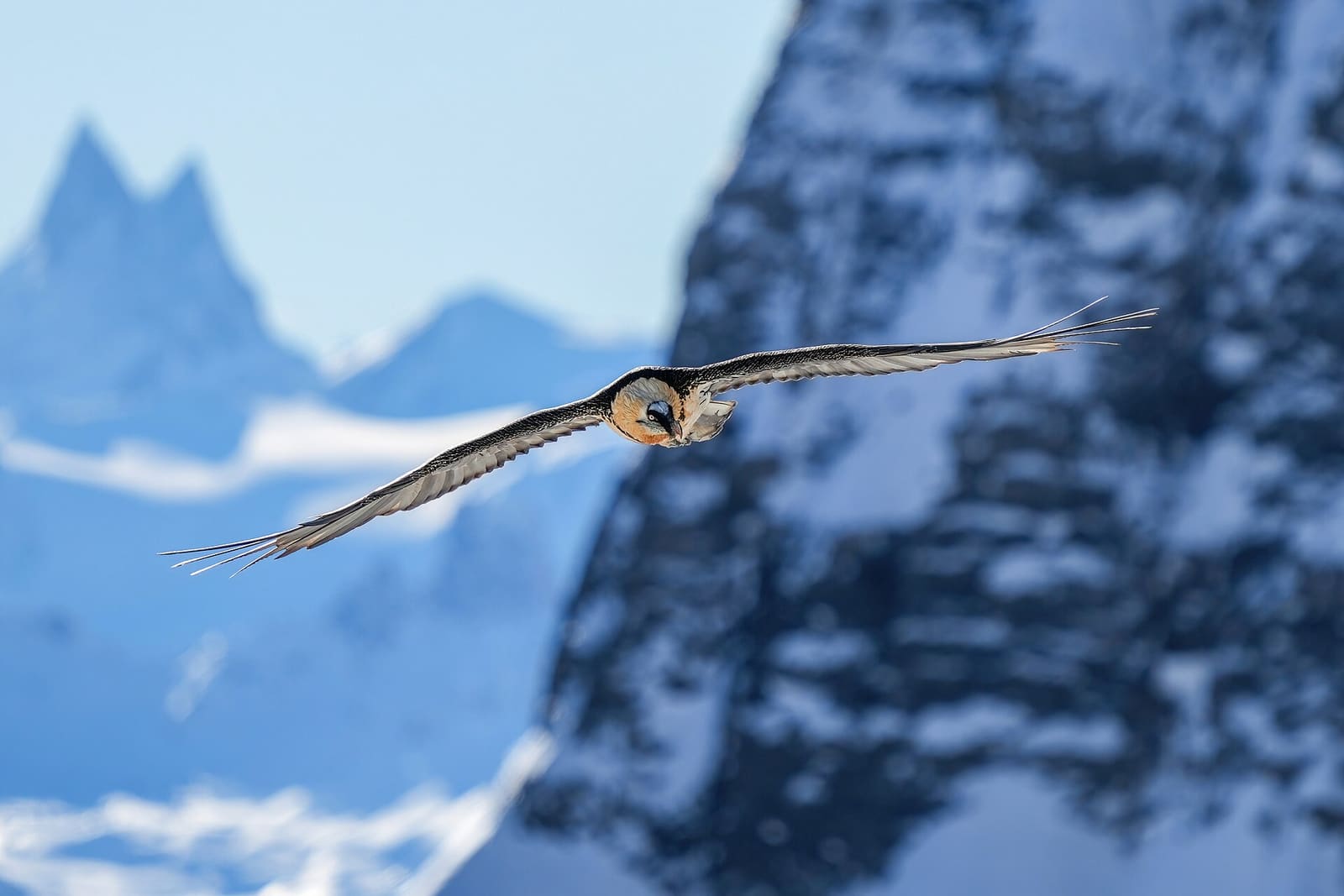
If you ever see a huge bird with long, narrow wings and a diamond-shaped tail gliding along a rock face in the Pyrenees, you may be looking at one of Europe’s most unusual animals: the bearded vulture (Gypaetus barbatus), also known as the lammergeier.
Its Spanish name, quebrantahuesos (“bone-breaker”), is no exaggeration. It is the only bird in the world whose diet is made up mostly of bones.
A bone-proof stomach
When the other scavengers —griffon vultures, ravens, foxes— have finished with a dead animal, the skeleton is left. That is when the bearded vulture steps in. Various studies estimate that bones make up the vast majority of its food, with figures usually between 70% and 90%.
How does it manage?
- Extremely acidic stomach juices, with a very low pH, that dissolve bone within hours.
- An elastic oesophagus that allows it to swallow whole bones of considerable size.
- A surprising breaking technique: it carries bones that are too big up into the air and drops them onto rocky areas, called ossuaries, until they shatter.
Bone is also a food rich in fat (the marrow) and keeps for a long time, which gives it an advantage in harsh mountain winters.
A bearded vulture may use the same ossuaries for years: they are part of the mental map of its territory.
The colour it paints on itself
The chest and neck feathers of adults have a characteristic orange tone. For a long time it was thought to be natural. We now know the bird “applies” it by bathing in mud and water rich in iron oxide. Why it does so is still being researched: hypotheses include social signalling or possible protection.
From near extinction to return
The bearded vulture disappeared from most of Europe in the 19th and 20th centuries because of direct persecution (it was falsely blamed for attacking livestock and children), poison and lack of food. In Western Europe, only the Pyrenees kept a stable population.
From 1986, an ambitious international programme began releasing captive-bred birds in the Alps. Decades later, the species breeds there naturally again. In Spain, reintroduction projects have been carried out in the Picos de Europa, Andalusia (Cazorla) and other mountain ranges.
Current threats
- Illegal poison laid for other species.
- Lead in the remains of animals shot with lead ammunition.
- Collisions with power lines and wind turbines.
- Disturbance at nests during the long breeding season, which starts in midwinter.
Globally, the IUCN lists it as Near Threatened. If you want to understand what each category means, we explain it in how the Red List works.
How to watch it respectfully
- Use binoculars or a telescope and keep your distance from the cliffs.
- Do not share nest locations.
- If you find an injured or dead bird, call 112 or the wildlife rangers: it may be key to detecting poisoning.
The bearded vulture is one of the best examples of how science, patience and cooperation between countries can bring a species back to where it belongs. It is not the only high-altitude record holder: discover others in the highest-living animals on the planet.
Sources and references
- Vulture Conservation Foundation
- Bearded Vulture Conservation Foundation (FCQ)
- BirdLife International – Data Zone
This is original editorial content based on the sources cited. Spotted a mistake? Let us know and we will fix it under our corrections policy.