Red snow: the algae that tint the mountains and speed up melting
In summer, some snowfields in the Alps, the Pyrenees or the Arctic turn pink. It is not dust or pollution: it is microscopic algae with their own 'sunscreen'. And their colour has consequences.
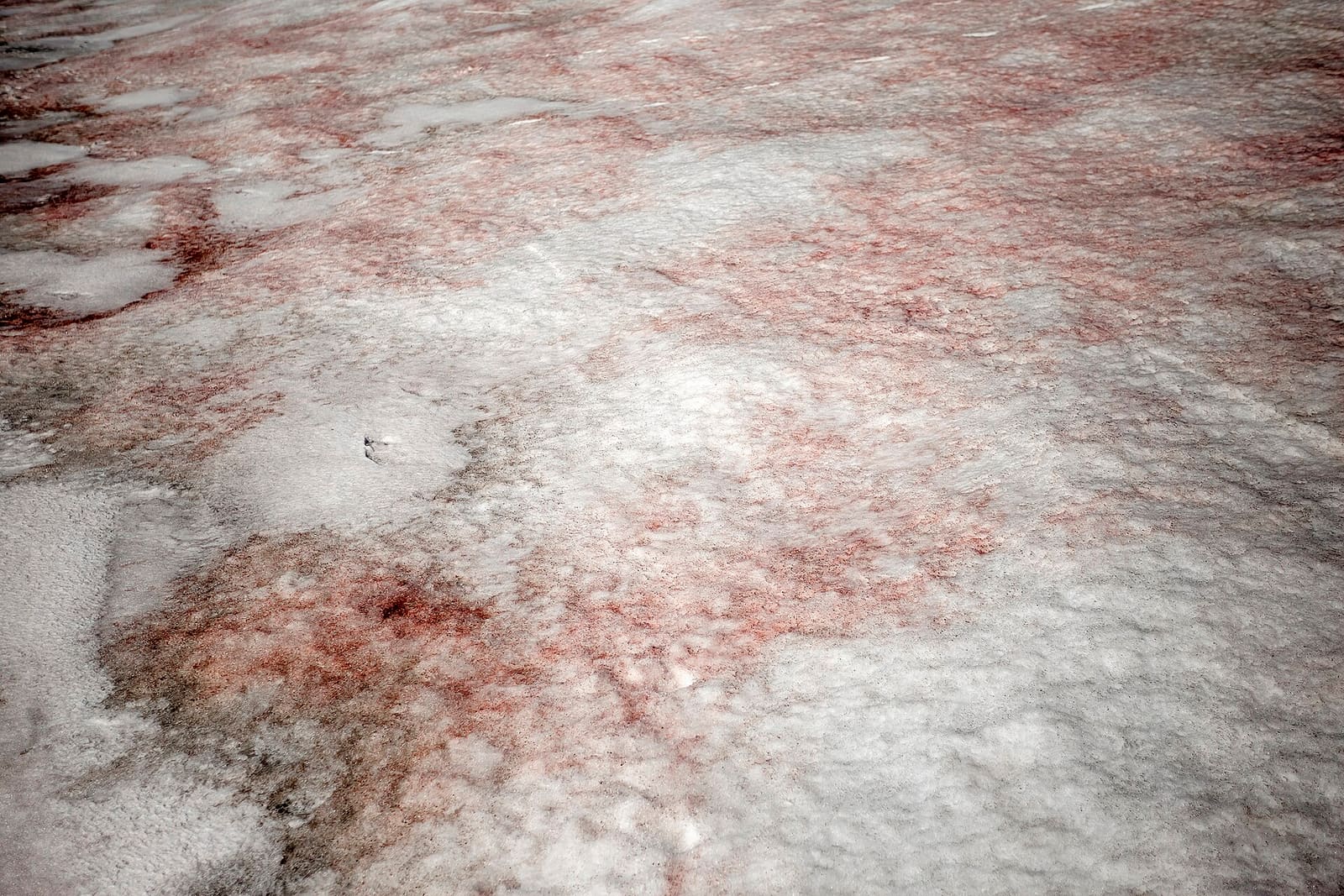
You are walking across a snowfield in late spring and you see pink patches, sometimes almost red, on the snow. If you crouch down, you might notice a faint fruity smell. That is why in some places it is called “watermelon snow”. It is not paint, Saharan dust or pollution. It is life.
Algae that live in snow
The cause is microscopic algae adapted to living in snow. The best known was long called Chlamydomonas nivalis; today many of the algae responsible for red snow are classified in the genus Sanguina.
Their life cycle is fascinating:
- During winter they lie dormant in the soil or the snow.
- In spring, when the snow starts to melt and there is liquid water between the crystals, they become active and swim with flagella towards the surface.
- There they form hardy cysts loaded with red pigments.
A natural sunscreen
Why red? On the snow surface, solar radiation —including ultraviolet— is extremely intense, because the light from the sky adds to the light reflected by the snow itself. To protect themselves, these algae produce carotenoids, such as astaxanthin, the same type of pigment that colours prawns and salmon.
That pigment acts as a sunscreen: it protects their cellular machinery and also absorbs heat, which helps melt a little of the snow around them and provides the liquid water they need.
Red snow is a tiny ecosystem: algae, bacteria, fungi and minute invertebrates that feed on them.
The problem: darker snow, faster melting
Clean snow reflects most sunlight. This is called albedo. Anything that darkens it —dust, soot or algae— makes it absorb more energy and melt sooner.
In 2016, a study published in Nature Communications analysed algae-covered snow in the Arctic and other regions, and estimated that blooms can reduce albedo by up to about 13% in some areas over the melt season. It is a vicious circle: more melting, more liquid water, more algae, darker snow, more melting.
This adds to the factors we explain in why glaciers are melting, although its relative weight compared with warming is still being studied.
Where to see it
Red snow appears in mountains and polar regions all over the world:
- The Alps and the Pyrenees, on snowfields that persist into summer.
- California’s Sierra Nevada and the Rockies.
- The Arctic (Greenland, Svalbard) and Antarctica, where green snow caused by other algae species has also been documented.
Can you eat it?
Better not. Like any mountain snow, it may contain microorganisms and is not meant for consumption. If you need snow water on a trek, melt it and treat it as we explain in how much water to carry on a hike.
A landscape that speaks
Next time you see a pink patch on the snow, remember you are looking at a complete ecosystem, perfectly adapted to one of the harshest environments on the planet, and that its colour is also a small piece of the melting puzzle. If you enjoy these natural shows, carry on with the most impressive natural phenomena you can see with your own eyes.
Sources and references
- Lutz et al. (2016), Nature Communications – Impact of snow algae on albedo
- Swiss Federal Institute WSL – Snow algae research
- British Antarctic Survey – Green and red snow
This is original editorial content based on the sources cited. Spotted a mistake? Let us know and we will fix it under our corrections policy.