A satellite shows the Mediterranean has more eddies, and more energetic ones, than maps showed
On some days the eddies had up to 78% more energy than on the classic map. Many were close to the coast, west of Corsica or in the Alboran Sea.
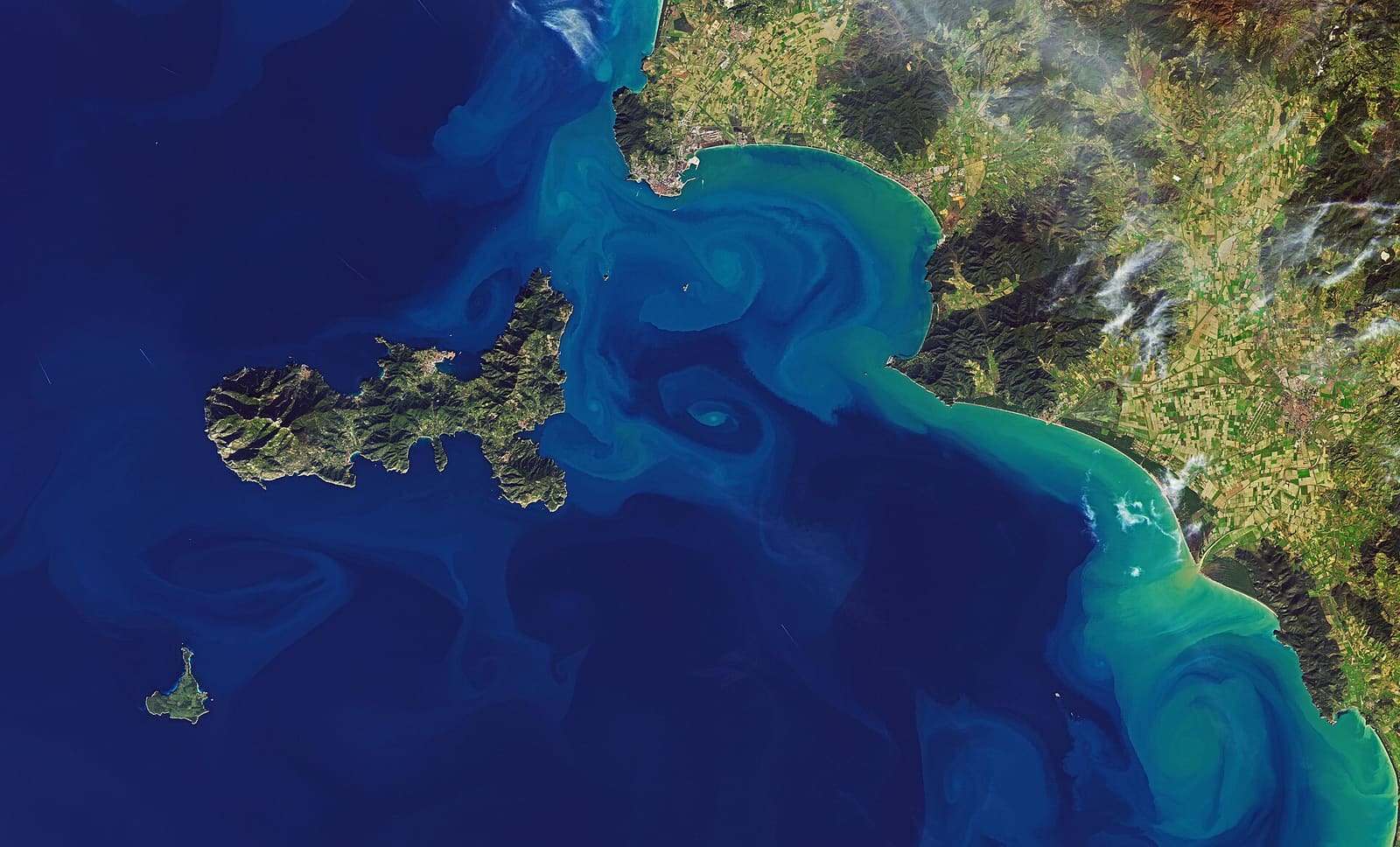
A team from Spain’s Institute of Marine Sciences (ICM-CSIC), led by Laura Gómez-Navarro, has used the SWOT satellite, from NASA and the French space agency, to look at eddies in the western Mediterranean. And it found more than the classic maps showed.
A satellite that sees in two dimensions
Earlier satellites measure sea height only along a narrow line beneath their orbit. SWOT measures wide swaths, so it picks up smaller eddies.
Using data from August 2023 to June 2024, the study compares maps that include SWOT with the classic Copernicus map:
| Item | Classic map | With SWOT |
|---|---|---|
| Anticyclonic eddies per day (average) | 12.5 | 19 |
| Cyclonic eddies per day (average) | 16.6 | 20.4 |
| Daily detections in April 2024 | 916 | 1,245 |
Eddy energy is on average 6% higher, but on 16 September 2023 the difference reached 78%. Many of the differences are close to the coast, such as west of Corsica, and the Alboran Sea is among the most active areas.
Why it matters
- Marine litter: in simulations with particles released off Algeria, where they ended up after 20 days depended on the map used. Those eddies are linked to the litter that reaches the Balearics and Cabrera.
- Heat and nutrients: eddies carry them, so climate models for the area may need adjusting.
- Rescues and spills: finer maps help with searches at sea and responses to pollution.
The authors warn that SWOT has not been in orbit for long and more years of data are needed.
The ocean, at record levels
The study is part of the 10th Copernicus Ocean State Report. According to the report, in 2024 the Mediterranean was 1.23 °C above its historical average. That heat is already showing on the seabed: the mass flowering of Neptune grass in Murcia.
Sources and references
- ICM-CSIC – Pioneering eddy study in the Copernicus report, in Spanish (20/10/2026)
- State of the Planet – Copernicus Ocean State Report 10
- ECOticias – Mediterranean eddies and the SWOT satellite, in Spanish (07/11/2026)
This is original editorial content based on the sources cited. Spotted a mistake? Let us know and we will fix it under our corrections policy.