31 organisations from Spain, France and Andorra pool their data to protect Pyrenean flora
Data on Pyrenean plants is currently scattered and uses different criteria. The project will share more than 20,000 herbarium sheets and genetic data in four languages.
Spain’s CSIC, through the Pyrenean Institute of Ecology (IPE), has launched PHYLOFLORA-PYR, a project that brings together 31 organisations from Spain, France and Andorra to gather what is known about Pyrenean plants in one place. It was presented in Boltaña (Huesca).
The problem: scattered data
Information about Pyrenean flora is currently scattered across herbaria, databases and publications that use different classification criteria. That makes it hard to compare studies and track how plants are changing.
What it will do
- Build an open digital platform with genetic and distribution data, descriptions and reference images.
- Descriptions will be in four languages, to help identify species.
- Share more than 20,000 herbarium sheets. The first ones were handed over at the launch.
| Item | Figure |
|---|---|
| Organisations | 31 (11 partners and 20 associates) |
| Duration | 3 years |
| Herbarium sheets | More than 20,000 |
| EU co-funding | 65% (POCTEFA programme) |
It is coordinated by Pablo Tejero, curator of the JACA Herbarium.
Why now
According to the Pyrenean Climate Change Observatory, the average temperature in the Pyrenees has risen 1.9 °C since 1959, and precipitation fell 12% between 1959 and 2023. A consistent database will help track those changes in plants, although the indicators show change without proving a single cause on their own.
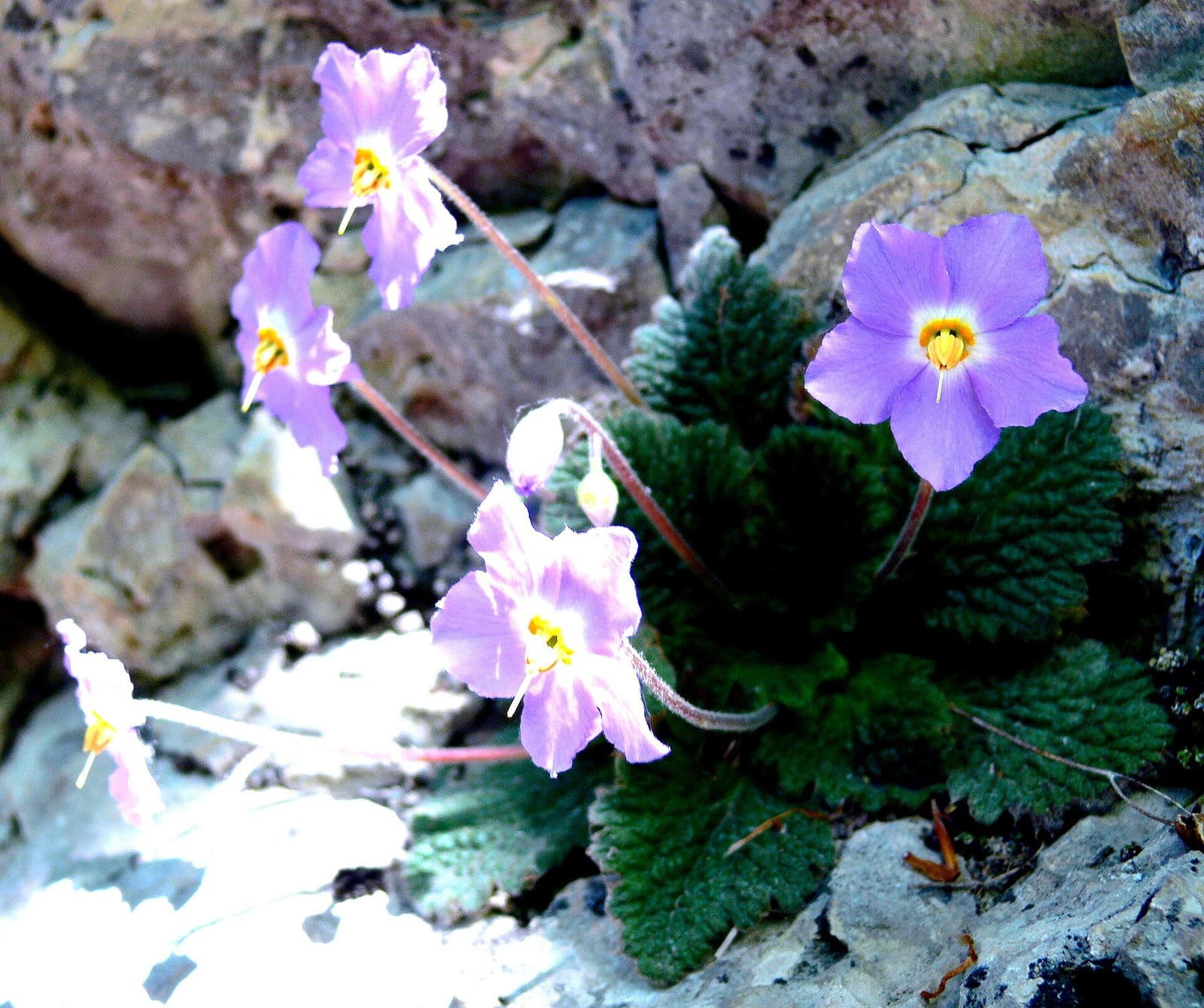
An example of how fragile this flora is: the tiny forget-me-not that lives only in Cadí-Moixeró.
Sources and references
- ECOticias – CSIC unifies Pyrenees flora data, in Spanish (06/11/2026)
- PHYLOFLORA-PYR (CSIC)
- Pyrenean Climate Change Observatory
This is original editorial content based on the sources cited. Spotted a mistake? Let us know and we will fix it under our corrections policy.