An AI from the University of La Laguna classifies orca calls in real time
It's one of the largest archives of orca sounds in the world. The researchers think it could be adapted to wild orcas, such as those in the Strait of Gibraltar.
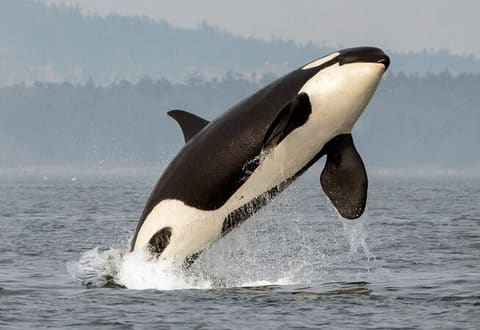
Researchers at the University of La Laguna (ULL) have built an artificial intelligence tool that recognises and classifies the different types of sounds orcas make, in real time.
What it was trained on
The system learned from two decades of recordings of the orcas at Orca Ocean, in Loro Parque, Tenerife: tens of millions of sounds which, according to its creators, make up one of the largest archives of its kind in the world.
“We trained the system on two decades of expert-validated recordings,” explains Javier Almunia, the project coordinator. It was developed by researchers Jonás Lüke and Fernando Rosa, with funding from Loro Parque Fundación. It has been running since February 2025 on the facility’s hydrophone network.
What it does and doesn’t do
- It does: identify which sounds repeat, in what context and with what behaviour, and match that with what the animals are doing at the time.
- It doesn’t: translate what they “say”. Almunia stresses that the goal isn’t to know the meaning of each call.
The published information gives no accuracy figures and doesn’t mention a scientific paper.
What it could be used for
The researchers think it could be adapted to other dialects and to wild orcas, to detect changes in behaviour or the impact of noise and shipping. Almunia suggests, as a future possibility, helping to prevent orca encounters with sailing boats in the Strait of Gibraltar.
Each orca group has its own repertoire: in British Columbia (Canada), 7 to 17 call types per group have been catalogued.
More marine science in the Canary Islands: the collapse of the long-spined urchin across the archipelago.
Sources and references
This is original editorial content based on the sources cited. Spotted a mistake? Let us know and we will fix it under our corrections policy.