Eight winters of radar reveal emperor penguin colonies on the move in the polar night
Colonies could be followed all year, including in darkness. They move and split, sometimes with no visible change in the ice, and the authors don't always know why.
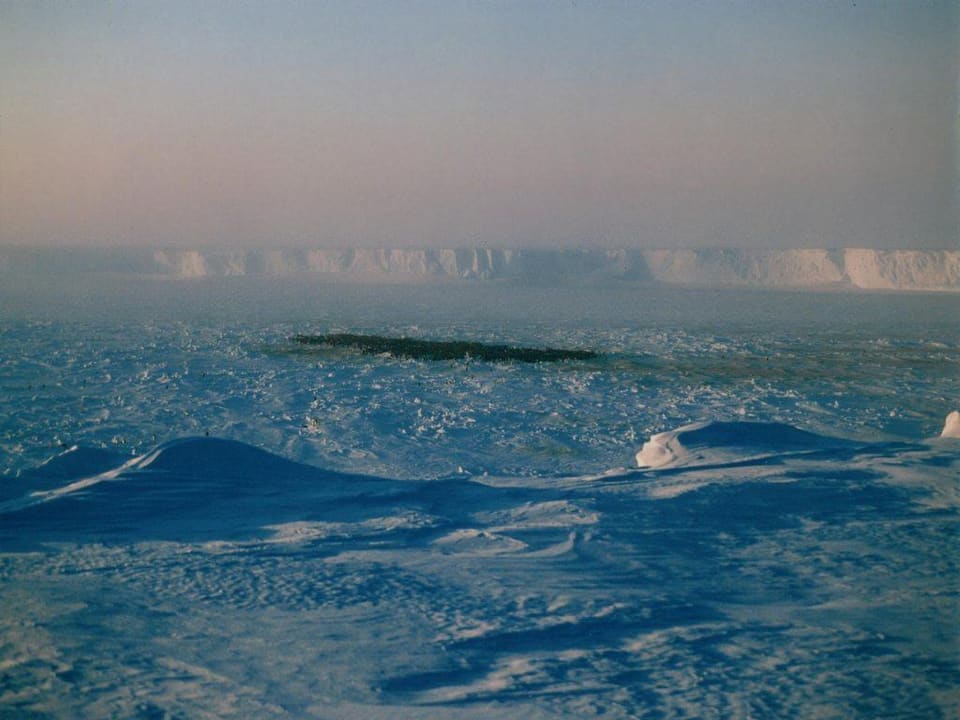
During the Antarctic winter, optical satellites see nothing. That’s exactly when emperor penguins are breeding. A study published on 2 September in Communications Earth & Environment, led by Grant Macdonald of Durham University, has followed them with radar, which works in darkness and through cloud.
Three colonies, eight winters
The team used the European Space Agency’s Sentinel-1 satellite from 2017 to 2024. Colonies show up as bright patches, later checked against optical images of their guano stains.
| Colony | Spring adults | Radar images checked |
|---|---|---|
| Atka Bay (Weddell Sea) | 9,657 | 444 |
| Coulman Island (Ross Sea) | 19,822 | 328 |
| Cape Washington (Ross Sea) | 12,178 | 391 |
What they found
- They move in winter, though less than later on. At Cape Washington birds mostly stayed within about 0.5 km of their first position.
- In 2022, the Atka Bay colony moved more than 1.5 km between 17 April and 7 July. The authors say the reason is “not yet obvious”.
- From September they split: up to 8 groups at Atka Bay, 14 at Cape Washington and 19 at Coulman Island.
- At each site, at least one group moved more than 5 km. The largest move was 5.73 km, at Coulman.
- In seven of eight years, Atka Bay’s colony moved from fast ice onto the neighbouring ice shelf, months before the ice broke up. The paper doesn’t explain why.
In the Ross Sea, groups often moved at the same time with no visible ice change. The authors suspect wind, but lack the data to test it.
Why it matters
Emperors breed on sea ice, and that ice has shrunk sharply since 2016. In models cited by the paper, under high warming 98% of colonies could be quasi-extinct by 2100.
Radar has limits: it can’t count birds or detect every colony. But a winter map could help create exclusion zones. For another change on the continent, read about the protection of Antarctic vegetation.
Sources and references
This is original editorial content based on the sources cited. Spotted a mistake? Let us know and we will fix it under our corrections policy.