Revierta, the orphaned imperial eagle flying free again in Madrid with GPS
She was found in July, thin, dehydrated and with mouth lesions. After recovering, she flew free on 10 October. In Madrid, imperial eagle pairs went from 30 to 83 in fourteen years.
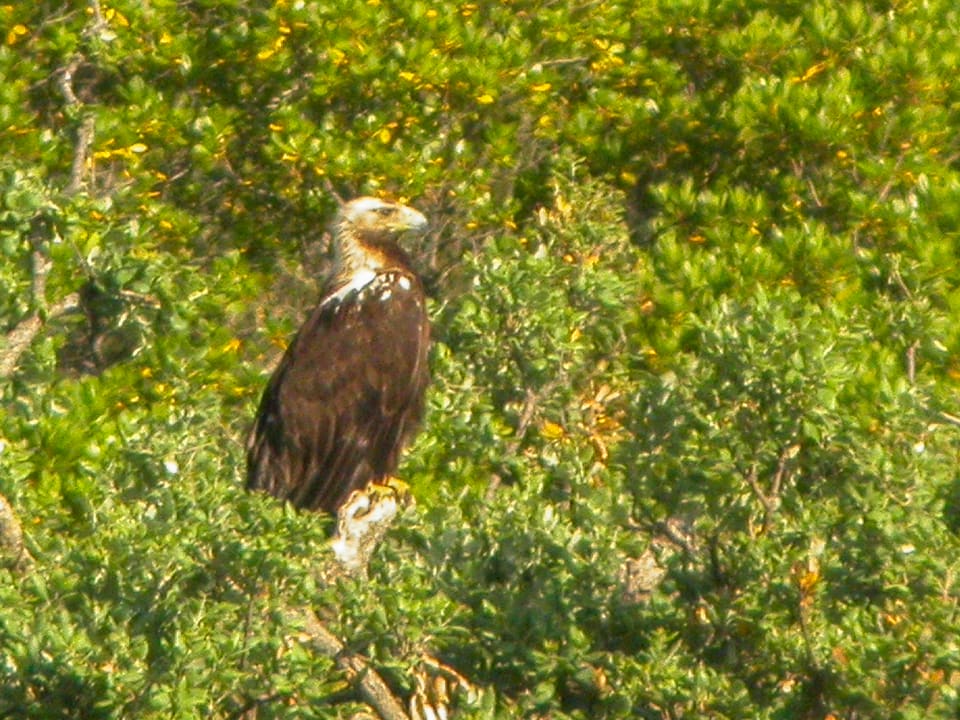
Good news for one of Spain’s most iconic birds. Revierta, a young female Spanish imperial eagle, is flying free again in the Madrid region after three months of recovery. And she carries a GPS tag that will let the team follow her first steps in the wild.
From orphan to free
- In mid-July, the Civil Guard’s environmental unit (SEPRONA) alerted GREFA to an imperial eagle chick in trouble in Navalcarnero.
- The orphaned fledgling was thin, dehydrated and had mouth lesions caused by trichomonas, a parasite common in raptors that eat pigeons.
- She recovered at GREFA’s Wildlife Hospital.
- On 10 October she was released in a suitable area of western Madrid region, with her “godfather”, José Juárez, director of the Guadarrama River Middle Course Regional Park.
Watched from the sky
Revierta wears a ring and a GPS transmitter. GREFA keeps leaving supplementary food, and a camera trap has confirmed she visits it: she probably isn’t hunting on her own yet. That’s normal for a young bird, which needs time to learn.
A species on the rebound
The Spanish imperial eagle lives only on the Iberian Peninsula and came close to extinction in the 20th century. It’s still listed as “Endangered” in Spain, but its population is growing. In the Madrid region, according to the Ecological Transition Ministry’s census, breeding pairs rose from 30 in 2008 to 83 in 2022.
Every bird returned to the wild counts for a species that exists only on the Iberian Peninsula.
If you find an injured raptor or a chick in trouble in the countryside, don’t pick it up: call 112 or the environmental rangers so a rescue centre can collect it. Meet another raptor that came back from the brink in our feature on the bearded vulture.
Sources and references
This is original editorial content based on the sources cited. Spotted a mistake? Let us know and we will fix it under our corrections policy.