The Bangka slow loris, a venomous primate feared extinct, is still alive in Indonesia
The Red List has it as possibly extinct. Yet a rescue centre on Bangka Island has been picking them up from backyards, roads and plantations, often hurt by power lines, vehicles and dogs.
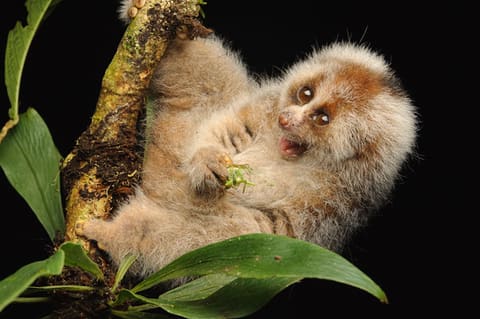
It’s small and venomous, and despite what the record suggested, it’s still out there. A new study says plainly: “Our findings clearly demonstrate that N. bancanus is not yet extinct.”
A forgotten primate
The Bangka slow loris (Nycticebus bancanus) lives in parts of Borneo and on Bangka Island, Indonesia. Its last record in the scientific literature dated from around 1937, and in 2015 the IUCN listed it as critically endangered and possibly extinct. There have been sporadic sightings since, but none in published studies.
The evidence: rescues
There was no grand rediscovery. The evidence comes from more than 90 lorises picked up from backyards, roadsides and plantations by the Alobi rescue centre. In 2021 alone, the centre rescued 43 and mapped 39 across Bangka’s four districts.
Timon Glaw, a co-author from Vienna’s Haus des Meeres zoo, said it was surprising that “such a distinctive and fascinating primate could remain almost completely overlooked by science” for nearly a century.
What threatens it
- Forest loss: habitat fell 62% between 2000 and 2012. Langka Sani, Alobi’s director, blames illegal tin mining and oil palm clearing.
- Power lines: in 2021, seven rescued lorises suffered electrical burns.
- Other dangers: vehicles, dogs and fences. At least three died that year.
What scientists are asking for
86 recovered lorises have been released into protected forest fragments. The authors want the IUCN to reassess the species and drop the “possibly extinct” tag, along with habitat protection, post-release tracking and a captive-breeding programme.
Not being extinct doesn’t mean being safe. To understand these categories, read how the IUCN Red List works.
Sources and references
This is original editorial content based on the sources cited. Spotted a mistake? Let us know and we will fix it under our corrections policy.