Nepal tests artificial scents to keep tigers and leopards away, following trials in Botswana
Of ten compounds, three were linked to fewer leopard detections and two to fewer tiger detections. Others actually drew tigers in. Scientists warn there's a long way to go.
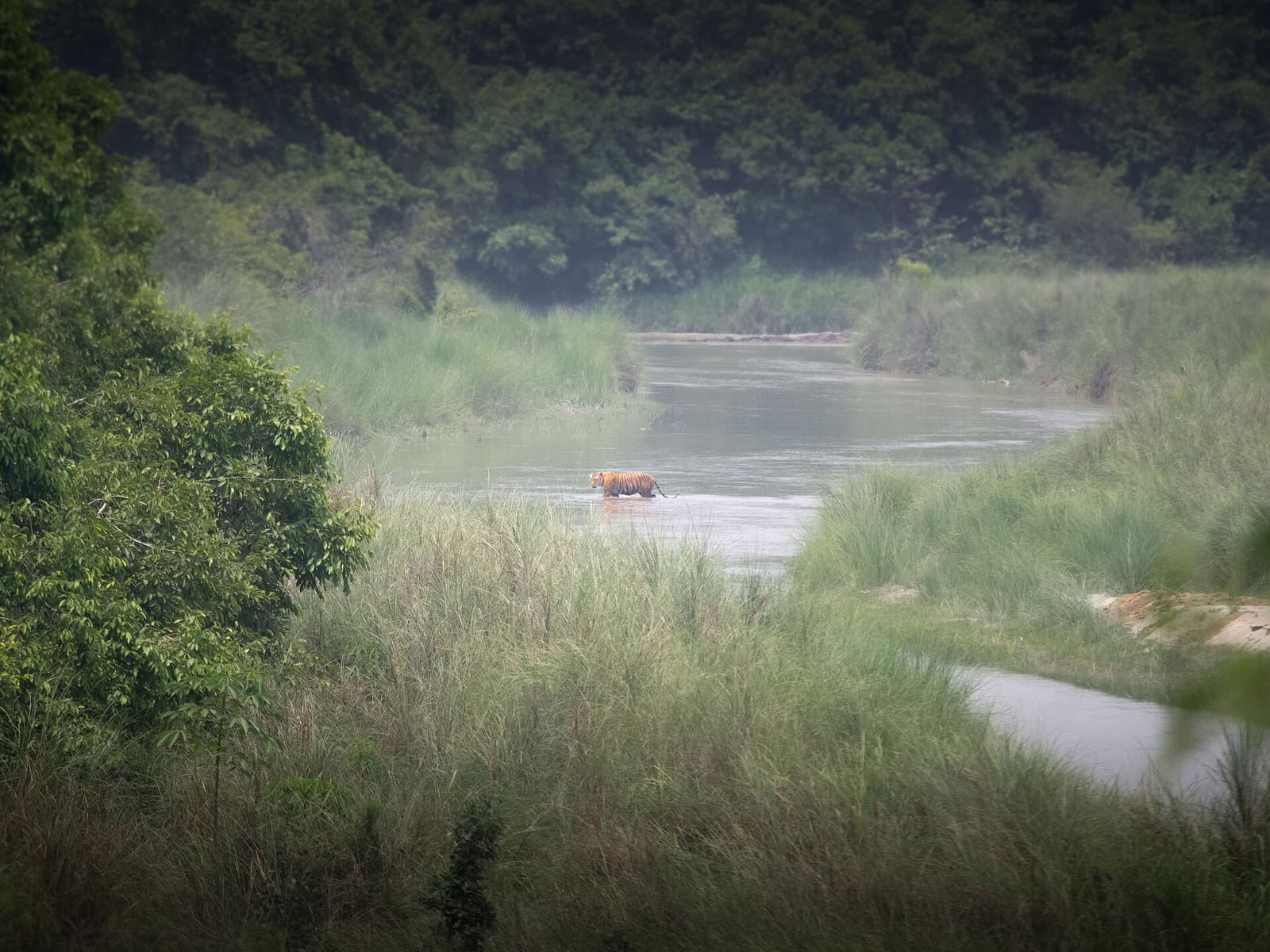
What if you could put up a scent “fence” to stop a tiger entering a village? That’s what Nepal is testing with BioBoundaries: lab-made versions of the chemicals big cats use to mark territory.
How the trial works
It runs mainly in the Khata Corridor, a 13 km strip linking Bardia National Park with India’s Katarniaghat Wildlife Sanctuary. Forest authorities in Bardiya and Dolpa are also involved.
- 30 stations with an iron stake, a dispenser and a camera trap.
- Control stations with an empty dispenser.
- It began in October 2024 with 10 compounds; a second phase with 6 ran from December 2025 to June 2026.
The idea comes from Botswana
In the mid-1990s, Tico McNutt proposed using scent marks to keep African wild dogs inside protected areas. Later, Peter Apps identified chemicals in leopard urine, and one of them, 3M3MB, substantially reduced leopard attacks on livestock.
Results: promising but mixed
Three compounds were linked to fewer leopard detections and two to fewer tiger detections. Some tigers turned back after sniffing. But other compounds drew tigers in: Shashank Poudel of WWF Nepal says they visited more often, the opposite of the goal.
A cat turning around doesn’t mean fewer livestock attacks. “It’s a long way from proving that — and we don’t claim otherwise,” warns Martin Gilbert of Cornell University.
The doubts
- Cats could shift to other areas or get used to the smell.
- Weather, maintenance, cost and local manufacturing all matter.
- Babu Ram Lamichhane of Wild Care Nepal, who isn’t involved, notes that territorial behaviour doesn’t necessarily stop tigers from sharing space.
Researchers stress that scents would complement, not replace, stronger sheds and safer herding.
Sources and references
This is original editorial content based on the sources cited. Spotted a mistake? Let us know and we will fix it under our corrections policy.