A very rare bird turns up in the Congo, 400 km from where it was thought to live
The grey-necked picathartes, a bald-headed bird that nests on rocks, has turned up in Luki (DR Congo), Conkouati-Douli (Congo) and Mayombe (Angola). Its forest shrinks every year.
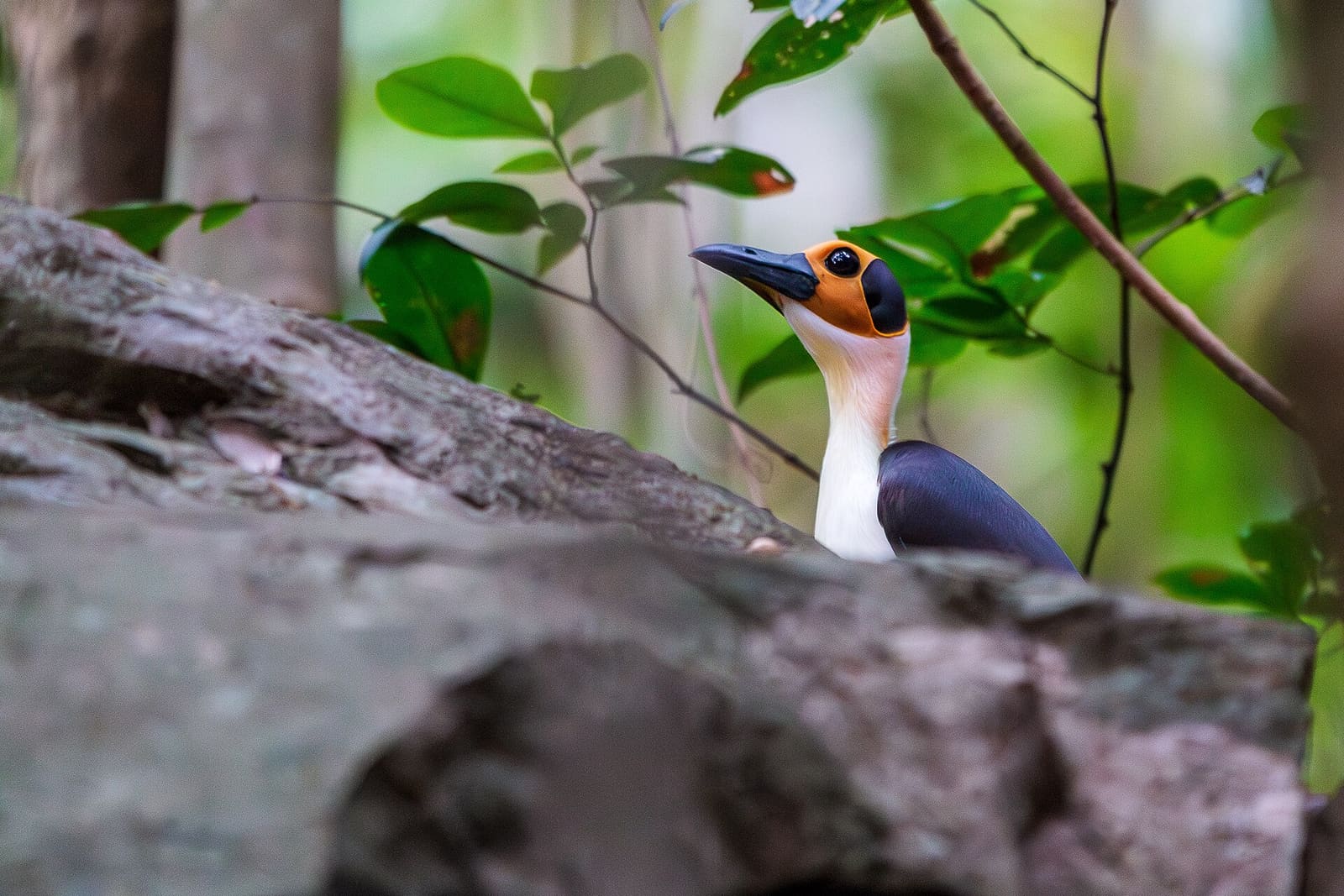
Few birds excite ornithologists like the picathartes, or rockfowl: birds with bald, colourful heads that build mud nests stuck to rocks in the rainforest. Now camera traps have found the grey-necked picathartes (Picathartes oreas) where nobody expected it: in the forests of the Congo, nearly 400 kilometres south of its known range.
Three finds in three countries
The study, published in the ornithology journal Ostrich, brings together three records:
- Luki Biosphere Reserve (DR Congo): cameras set up in 2021 in a survey led by Jean Semeki of the University of Kinshasa filmed the bird. It’s the first record in the country. “When I first saw the video, I couldn’t believe my eyes,” said Hugues Dethier, who analysed the footage.
- Conkouati-Douli National Park (Republic of Congo): detected for the first time about two years later.
- Mayombe National Park (Cabinda, Angola): Pedro Vaz Pinto found a breeding colony in 2023, with four nests holding eggs and chicks.
The IUCN lists the species as “Near Threatened”: its range is small and its habitat is being degraded.
A forest in retreat
The good news comes with a warning. Satellite data show Luki has lost more than 3,500 hectares of primary forest since 2001, over 18% of its forest cover, with about 1,125 hectares lost in 2023–25 alone. Shifting cultivation, charcoal production, artisanal logging and hunting are the main pressures.
“The current situation in the Luki Reserve is very alarming,” warns Jean Semeki.
Mayombe, a shared forest
The four countries that share the Mayombe forest (Gabon, the Republic of Congo, Angola’s Cabinda and DR Congo) agreed in 2013 to create a transboundary protected area, but the plan has stalled for lack of funding and coordination. The picathartes find strengthens the case for reviving it.
“There is no way we can protect the Mayombe without transboundary collaboration — simply no way,” says biodiversity consultant Tamar Ron.
Sources and references
This is original editorial content based on the sources cited. Spotted a mistake? Let us know and we will fix it under our corrections policy.