A 30-kilo rat: giant rodent from 35 million years ago identified in Thailand
It weighed roughly half as much as a capybara, the largest living rodent, and lived in swampy areas by a lake.
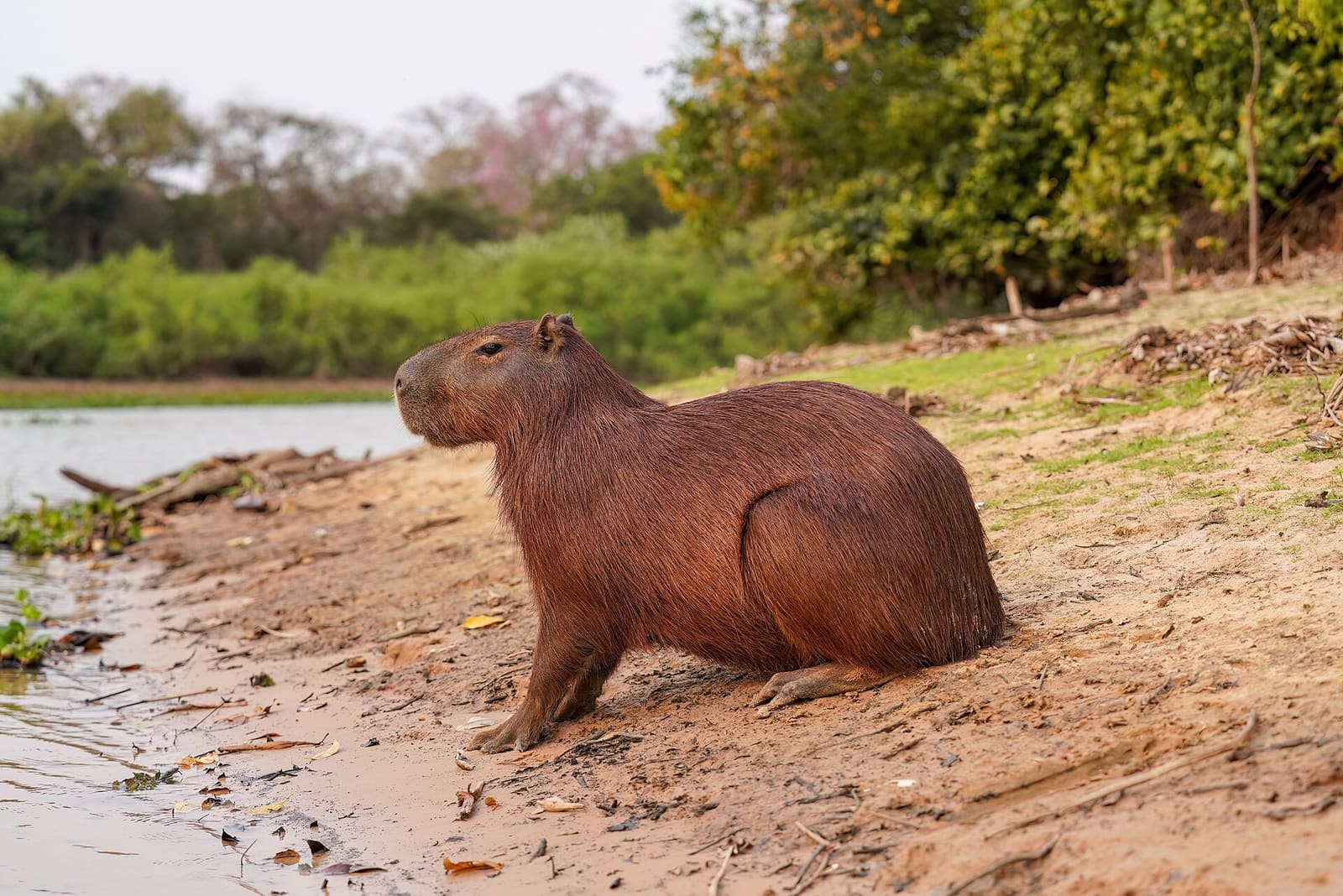
Around 35 million years ago, a 30-kilo “rat” lived in what is now Thailand. Scientists have named it Yakamys sirindhornae and described it in the journal Scientific Reports.
Two teeth in a mine
Everything we know comes from two teeth: a molar and an incisor. They turned up in 2004 in a coal mine in Krabi province, in the south of the country. Geologist Pannipa Tian found the incisor and, because of its size, first thought it was a bone. Her supervisor realised it was the tooth of a giant rat.
More than twenty years later, a team from Thailand, France and Canada has confirmed it is a new species.
Half a capybara
Using seven different formulas, the researchers estimate it weighed between 21 and 47 kilos: about 30 on average. That’s roughly half the weight of a capybara, the largest living rodent in the world.
It lived in swampy areas on the shore of a lake, with plenty of food. It may have lived much like a capybara, although with only two teeth it is very hard to know what it looked like or what it ate.
Why it matters
It belongs to the ischyromyids, an extinct family of rodents, sometimes squirrel-like, that was common in North America and Europe but is almost absent from Asia’s fossil record. Yakamys was much bigger than its relatives. The authors think Asia already had huge rodents by the late Eocene.
The name combines “yak” (giant, in Thai) and “mys” (mouse, in Greek). It also honours Princess Maha Chakri Sirindhorn, a long-time supporter of science in Thailand.
Another tiny-fossil find this week: Synorerpeton, a 66-million-year-old amphibian from Huesca.
Sources and references
- IFLScience – Meet the giant prehistoric rodent that roamed Thailand's freshwater swamps 35 million years ago (11/2026)
- Khaosod English – 30kg giant rat lived in Thailand 35 million years ago, fossils reveal (04/11/2026)
This is original editorial content based on the sources cited. Spotted a mistake? Let us know and we will fix it under our corrections policy.