Quelccaya, one of the world's largest tropical glaciers, has lost 58% of its ice, and now lithium mines are on the way
Its water could supply Cusco for a century. Construction of the Falchani lithium mine, a few kilometres away, would start in 2028. Some want the glacier made a national park.
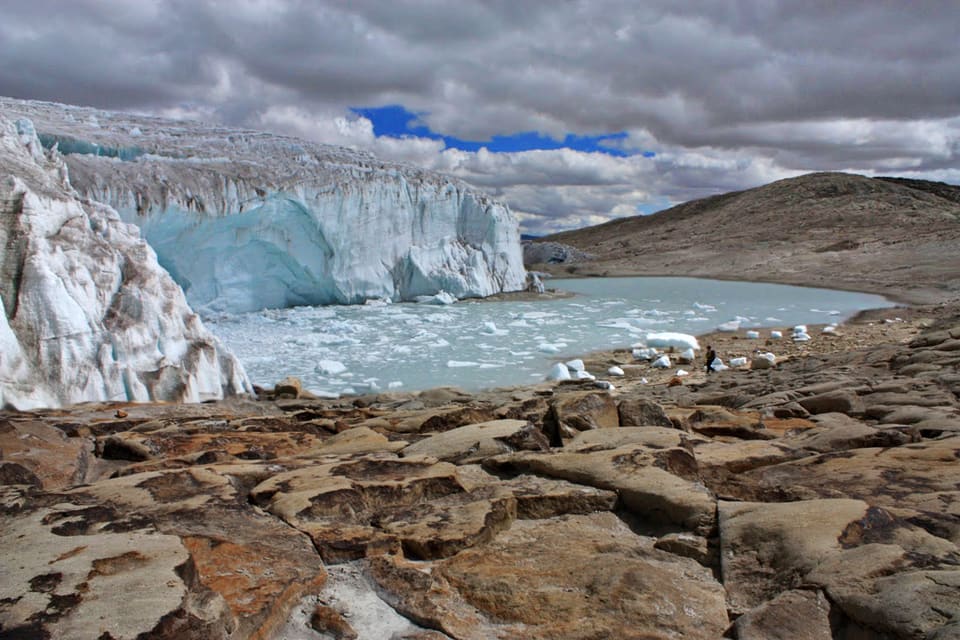
Quelccaya, in southern Peru, is the world’s second-largest tropical ice cap. According to Peru’s glacier institute (INAIGEM), it has lost 58% of its ice over the past 40 years. And now, Mongabay reports, the country is pushing lithium and uranium mining a few kilometres away.
A water tower in the Andes
- It lies in the Puno region and reaches about 5,600 metres.
- It holds about 2.43 billion cubic metres of water, enough to supply Cusco for a century.
- Its meltwater feeds rivers in Cusco, Puno and the Amazon basin.
- It is home to the endangered Andean mountain cat and the white-winged diuca finch, one of the two birds known to nest on ice.
The mines on the way
Canadian company American Lithium, through its subsidiary Macusani Yellowcake, holds at least 174 concessions in Puno covering more than 1,090 km².
| Project | What it is |
|---|---|
| Falchani | Open-pit lithium mine a few kilometres east of the glacier; construction planned for 2028 |
| Macusani | One of the world’s largest uranium deposits |
| Quelcaya | Lithium exploration project |
In 2026, Peru declared lithium and uranium of national interest. Experts quoted point out that the country has no specific law for uranium mining.
A divided region
Environmentalists, park rangers and glaciologist Lonnie Thompson, who has studied Quelccaya since 1974, fear that dust from the mines could fall on the ice and speed up melting. Thompson proposes making it a national park.
But Puno is one of Peru’s poorest regions, and mining could bring up to 5,000 jobs. A 2024 study in Corani, where Falchani is located, found most communities were in favour.
The company says it meets “the highest standards” of environmental care, but did not respond to Mongabay’s questions.
Another glacier shrinking before our eyes: the pond left by the melting Coalman glacier on Mount Hood.
Sources and references
This is original editorial content based on the sources cited. Spotted a mistake? Let us know and we will fix it under our corrections policy.