Russia blames climate change for glacier collapse that killed 17 in the Caucasus
Heat melted the snow protecting the ice that held the glacier up, officials say. Some climbers say its instability was well known.
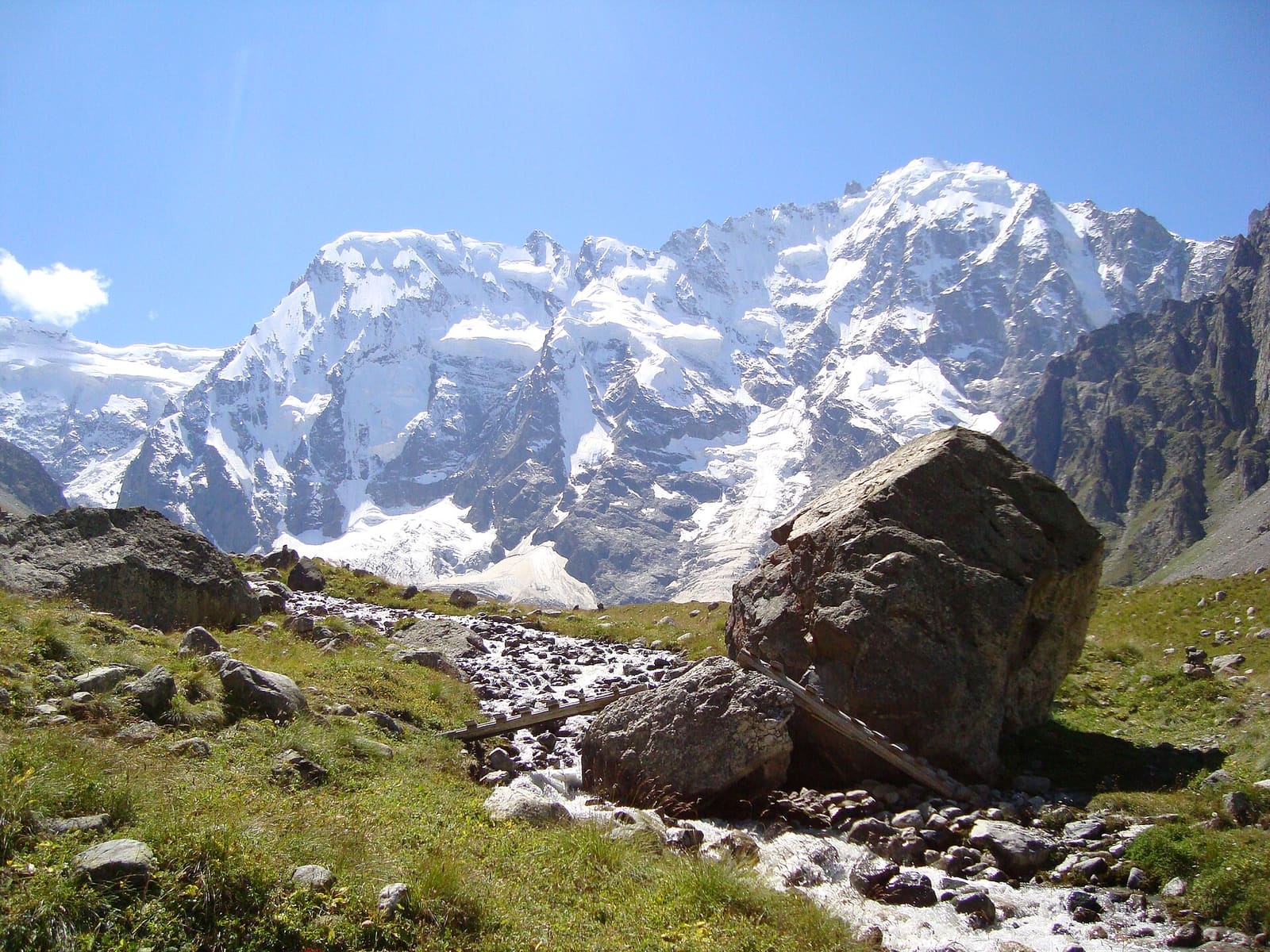
Russian authorities blame climate change for the collapse of a glacier that killed 17 people on 6 September in the northern Caucasus.
What happened
A hanging glacier on Mount Mizhirgi (5,047 m) collapsed onto a military group doing mountain training. The half-million cubic metre avalanche killed 17 people and injured 10 more. Another ten got down on their own unhurt.
The impact displaced so much air that, according to reports, some victims were thrown 200 to 300 metres downslope before being buried.
Why, according to Russia
Eldar Khashkhozhev, of the Ministry of Emergency Situations, explains it like this: heat melted the snow cover that protected the ice the glacier rested on. On top of that, permanent snow now starts higher up. Without that support, gravity won.
Could it have been foreseen?
A month earlier, a helicopter inspection saw nothing worrying, and some officials say it was unpredictable. Climber Dmitry Polyakov disagrees: mountaineers had long known the glacier was unstable and avoided approaching it in large groups.
It is Russia’s worst mountain disaster since 2002, when another glacier collapse killed 125 people in North Ossetia.
It isn’t an isolated case: in 2025, the Birch glacier buried the Swiss village of Blatten.
Sources and references
This is original editorial content based on the sources cited. Spotted a mistake? Let us know and we will fix it under our corrections policy.