Everest is not the farthest point from the centre of the Earth: Chimborazo is
Everest is the highest mountain above sea level, but if you measure from the centre of the Earth, an Ecuadorian volcano wins. The reason: our planet is not a perfect sphere.
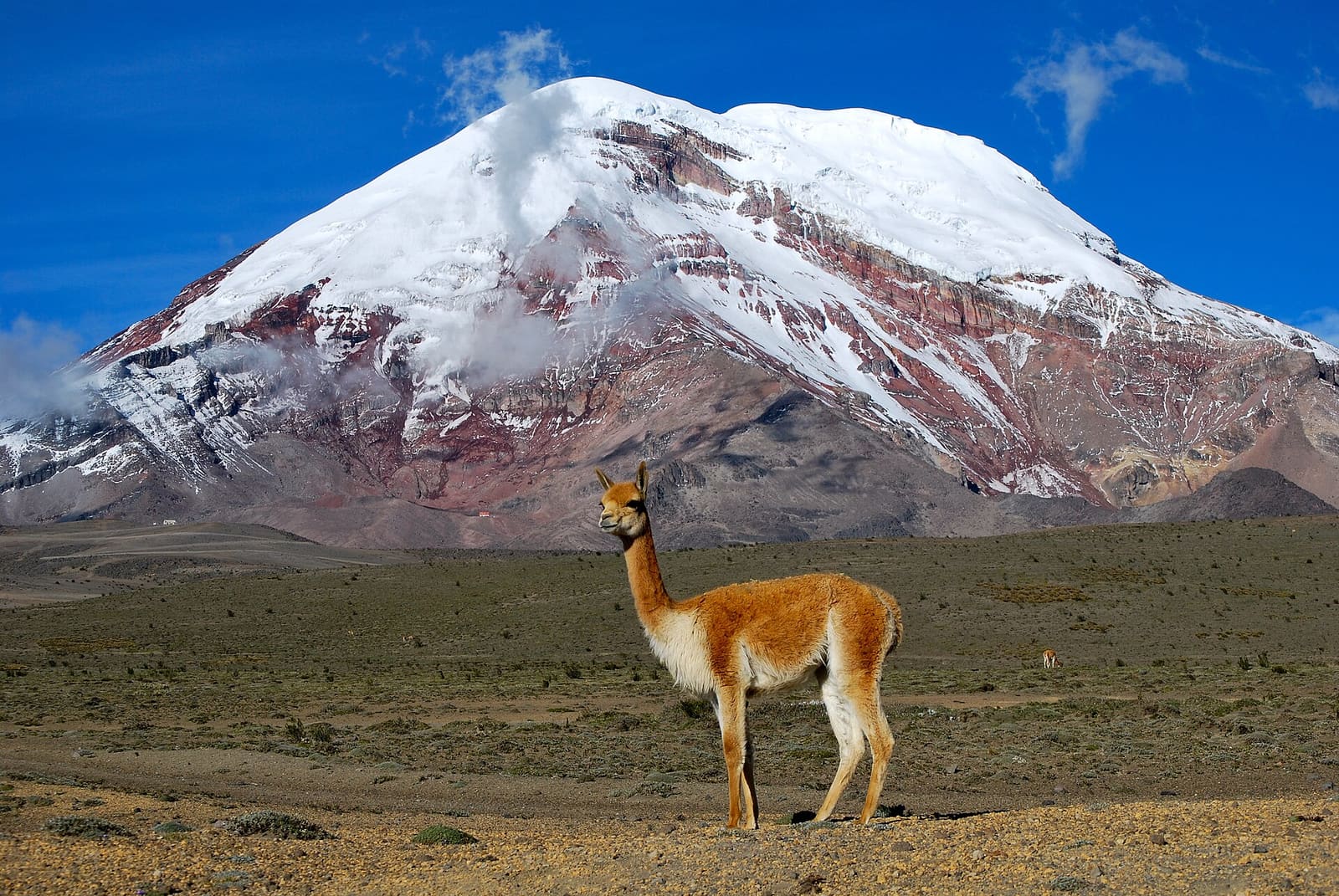
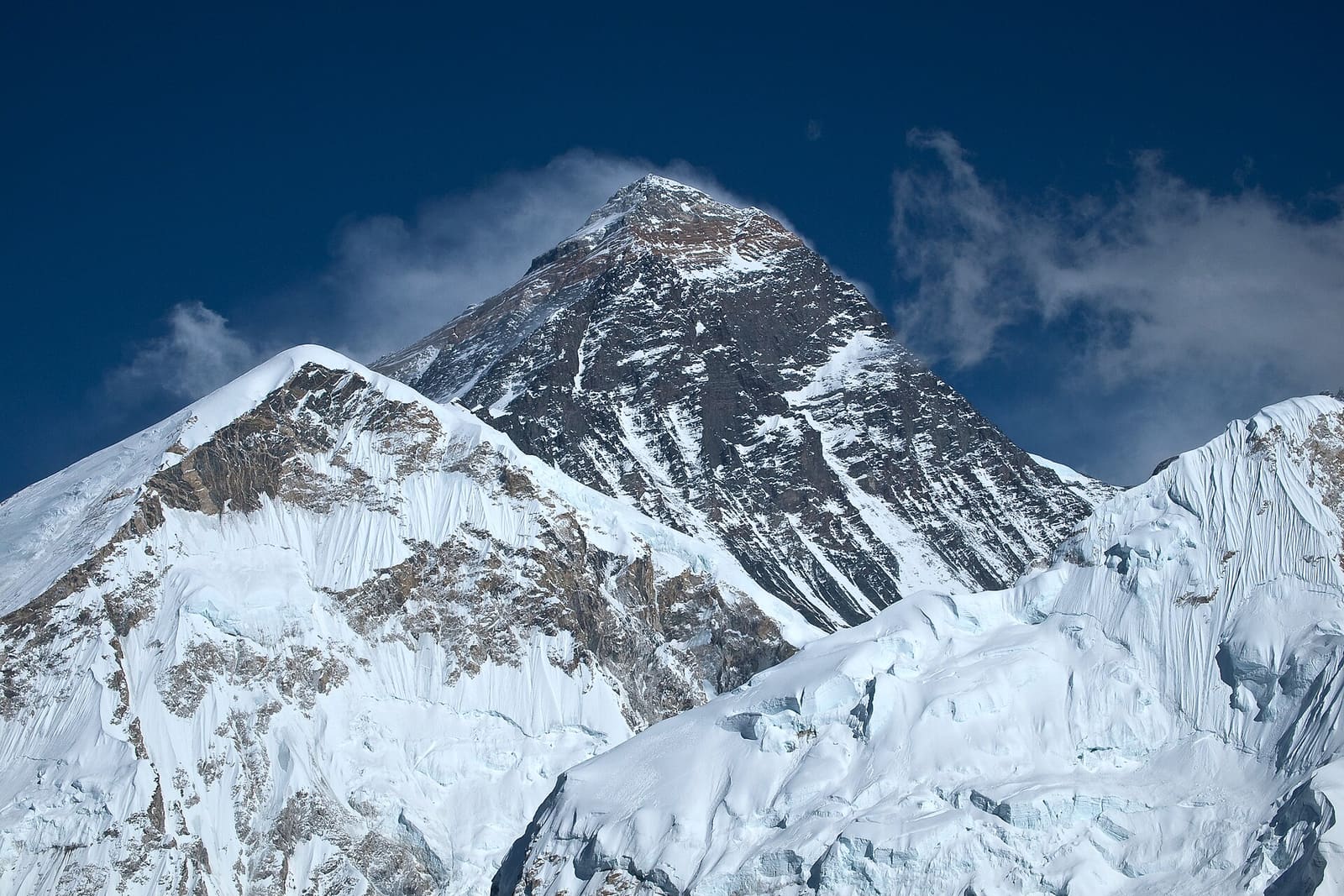
Ask which is the highest mountain in the world and almost everyone will answer “Everest”, and they will be right… depending on how you measure it. If the question is which point on the Earth’s surface is farthest from the centre of the planet, the answer is different: the summit of Chimborazo, a volcano in Ecuador.
A flattened Earth
The Earth is not a perfect sphere. Its rotation widens it slightly at the equator and flattens it at the poles. The result:
- Equatorial radius: about 6,378 km.
- Polar radius: about 6,357 km.
That is a difference of about 21 kilometres. So a mountain near the equator “starts” farther from the centre than one farther north.
Chimborazo lies barely one degree south of the equator. Everest is almost 28 degrees north. Although Everest is much higher above sea level, Chimborazo benefits from the equatorial bulge.
The figures
| Altitude above sea level | Distance to the Earth’s centre | |
|---|---|---|
| Everest | 8,848.86 m | ~6,382 km |
| Chimborazo | ~6,263 m | ~6,384 km |
Chimborazo’s summit is roughly 2 kilometres farther from the centre of the Earth than Everest’s. Strictly speaking, it is the point on the Earth’s surface “closest to space”.
Everest wins the vertical race above the sea; Chimborazo wins the race to the stars.
Three ways to be “the highest”
- Above sea level: Everest, at 8,848.86 metres according to the joint China–Nepal survey in 2020.
- From the centre of the Earth: Chimborazo.
- From its base: Mauna Kea, in Hawaii. It rises just over 4,200 metres above the sea, but starts on the floor of the Pacific Ocean: from base to summit it exceeds 10,000 metres.
The volcano and its history
Chimborazo is a glacier-covered stratovolcano, considered inactive though not extinct. It dominates the so-called Avenue of the Volcanoes of the Ecuadorian Andes.
For much of the 18th and early 19th centuries it was believed to be the highest mountain in the world. In 1802, the naturalist Alexander von Humboldt tried to climb it and reached a record altitude for the time before turning back. His observations of how vegetation changed with altitude on its slopes inspired one of the most famous scientific illustrations in history and laid the foundations of biogeography.
The first documented ascent to the summit was made by Edward Whymper —the same man who had conquered the Matterhorn— with guides Jean-Antoine and Louis Carrel in 1880.
Retreating ice
Like all tropical glaciers, Chimborazo’s have shrunk markedly. Its ice is a water source for nearby Indigenous communities, who historically even cut and carried it in blocks to sell at markets (the so-called hieleros, or ice men). We explain what is happening to the glaciers of the tropical Andes in the case of Venezuela.
Can you climb it?
Yes, but it is a high-mountain ascent, with glacier travel, crampons and rope, and an altitude that requires acclimatisation. It is not a hike: if you are interested, go with qualified local guides. And first, read what happens to your body above 3,000 metres.
Sources and references
- NOAA – National Ocean Service
- Military Geographic Institute of Ecuador
- Institut de Recherche pour le Développement (IRD)
This is original editorial content based on the sources cited. Spotted a mistake? Let us know and we will fix it under our corrections policy.