Spain protects 11,393 km of ancient drove roads with a new national network
The great royal drove roads, the routes livestock have used to cross Spain for centuries, will get better boundary marking, digital mapping and defence against encroachment. They're public land and wildlife corridors too.
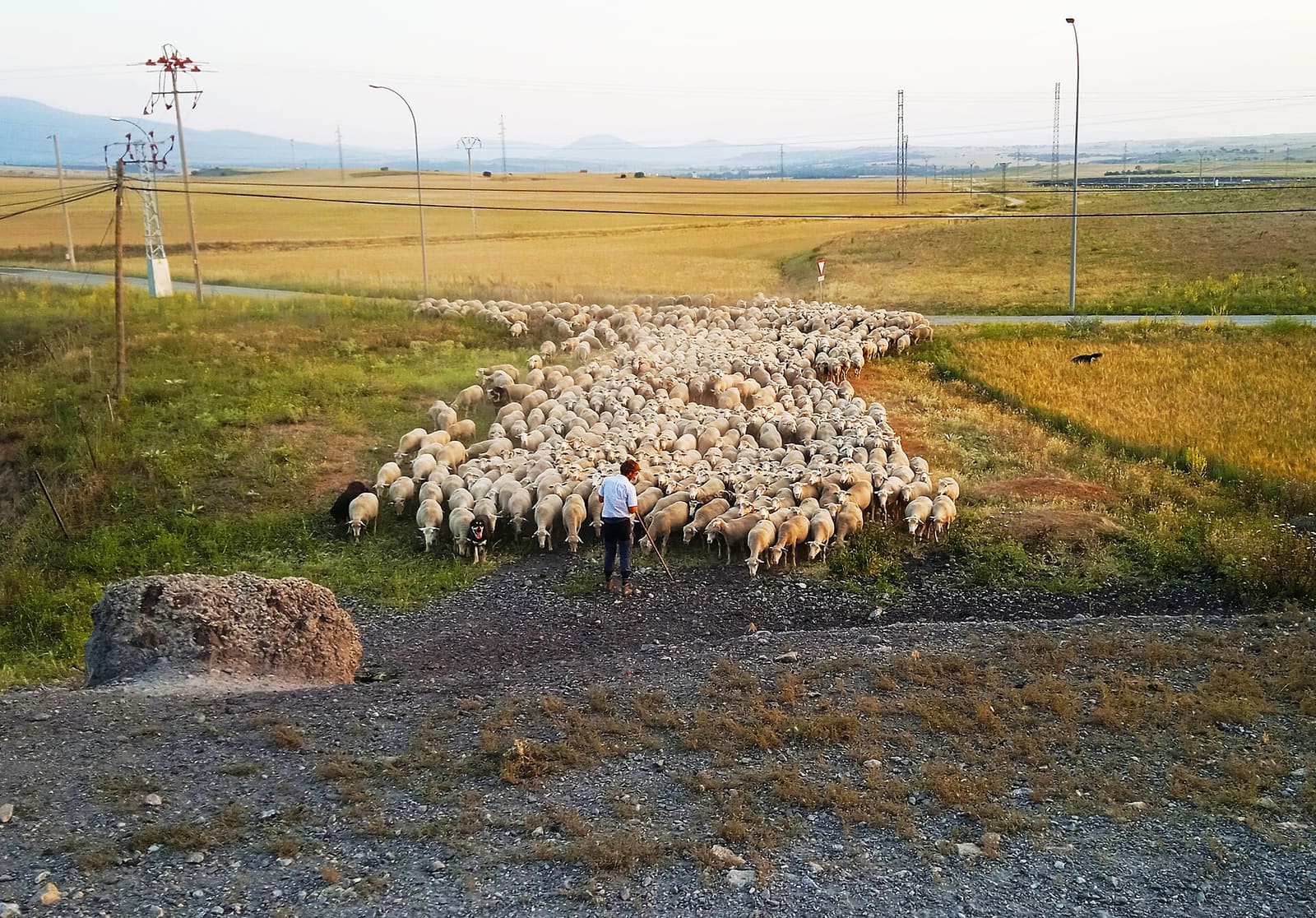
Spain’s cañadas reales, the wide routes flocks have used to cross the country since the Middle Ages, have more protection from today. The Council of Ministers has approved the royal decree on the National Network of Drove Roads (vías pecuarias), proposed by the Ministry for the Ecological Transition (MITECO).
What the national network is
It brings together about 11,393 kilometres of the country’s most important drove roads:
- The great royal drove roads (cañadas reales).
- Other traditional extensive livestock routes.
- Cross-border passes.
The aim is to keep them continuous across regions, because a route hundreds of kilometres long is useless if one stretch is cut.
It’s only part of a huge heritage: according to MITECO, Spain has more than 125,000 km of drove roads of different widths, about 425,000 hectares of public land.
What changes
The decree, which builds on the 1995 Drove Roads Act, provides for:
- Better identification and boundary marking of the routes.
- Stronger defence against encroachment and occupation.
- Information coordinated with the land registry and property register.
- Digital mapping, a documentary archive and an action programme.
- A Drove Roads Committee to coordinate authorities. Regional governments keep management and boundary powers.
Much more than livestock routes
The priority is to guarantee livestock movement and transhumance, listed by UNESCO as Intangible Cultural Heritage of Humanity in 2023. But drove roads are also:
- Ecological corridors linking natural areas.
- Natural firebreaks that break up the landscape.
- Cultural heritage and a driver of rural development.
- Space for compatible uses such as ecotourism, under each region’s rules.
For anyone heading into the countryside, the drove roads are a network of centuries-old public routes running across half of Spain.
If you like long journeys through rural Spain, take a look at the new Reto Ibérico. And remember: on a drove road, livestock has right of way. If you meet a flock, step aside and let it pass.
Sources and references
This is original editorial content based on the sources cited. Spotted a mistake? Let us know and we will fix it under our corrections policy.