The Crowley Lake columns: the temple a supervolcano carved in California
Rainwater boiling inside still-hot ash hardened the rock into pillars. Today they show when the reservoir drops.
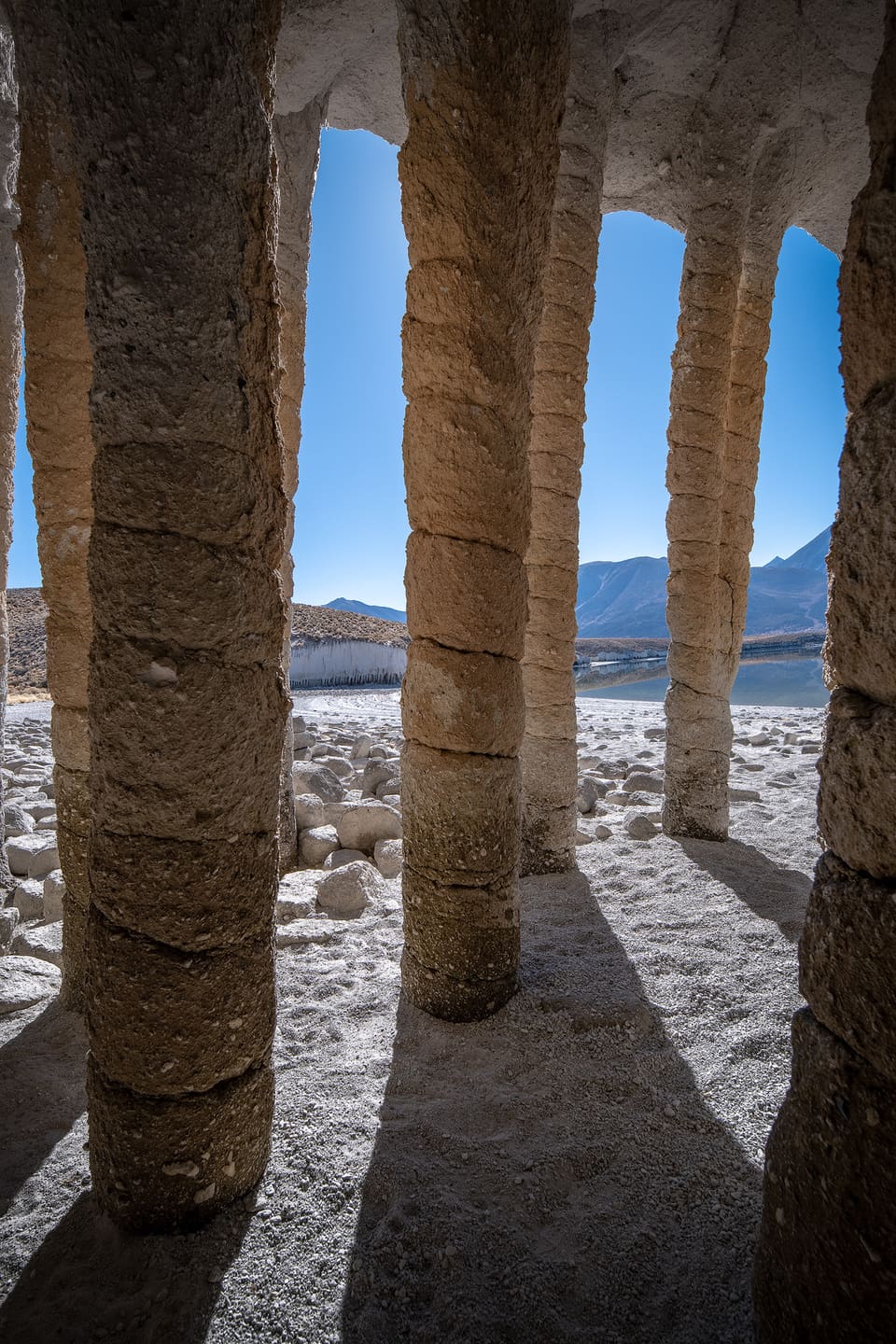
On the shore of Crowley Lake, in California, there is a place that looks like a ruined temple: hundreds of rock columns, linked by arches. Nobody built them. A supervolcano carved them.
A reservoir on a caldera
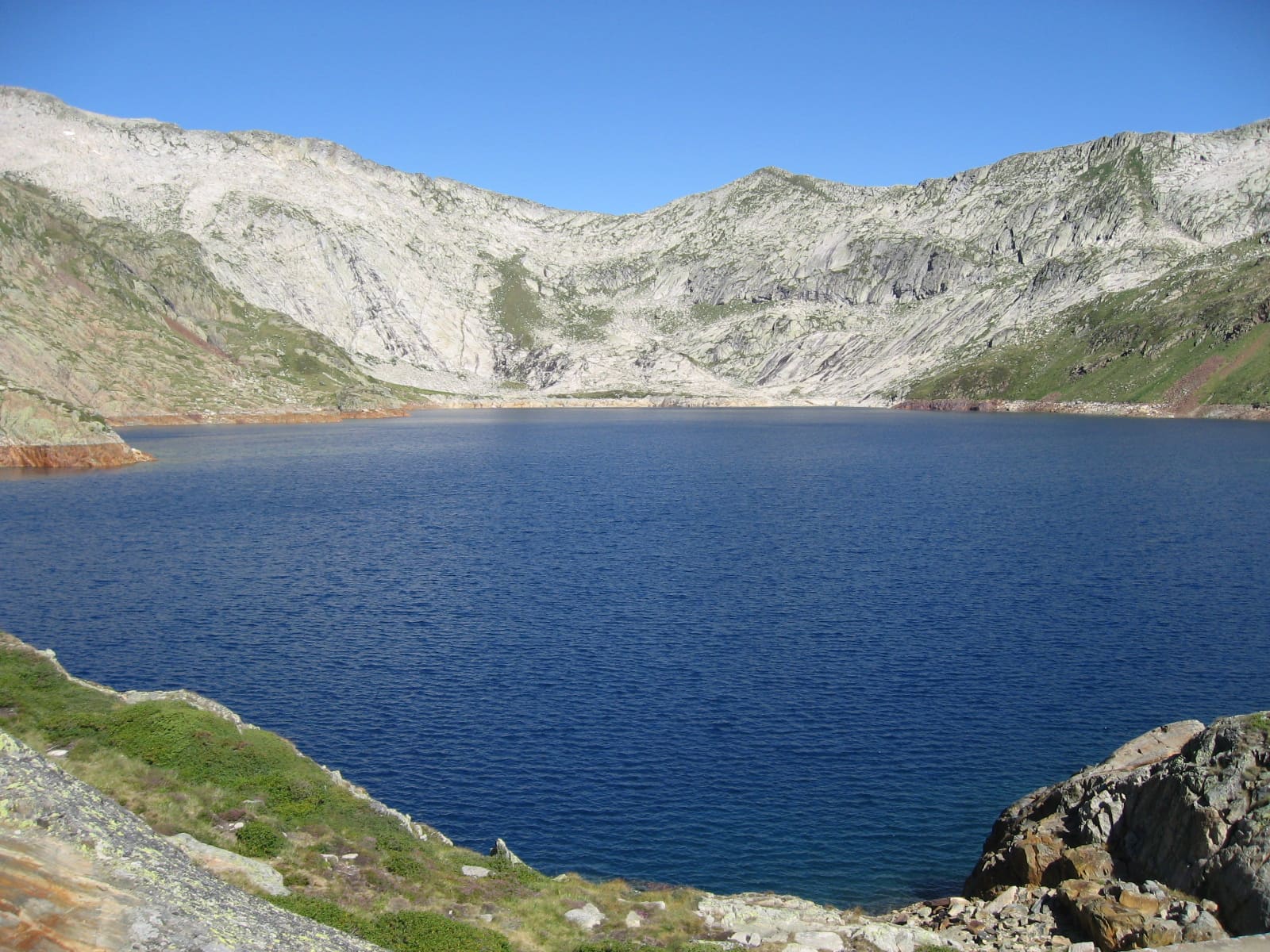
Crowley Lake is a reservoir in Mono County run by the Los Angeles Department of Water and Power. It sits inside the Long Valley Caldera, one of three ancient supervolcanoes in the United States.
About 760,000 years ago, an eruption released some 650 cubic kilometres of rock and ash in a single week. The ash reached Kansas. The caldera it left measures 32 by 18 kilometres.
How they formed
The columns stand at the base of the Bishop Tuff, a rock made of compacted volcanic ash. They average about six metres tall and come in reddish, beige, grey or white.
A study from the University of California, Berkeley explains their origin. While the ash was still hot, rainwater seeped in and boiled inside it. The steam carried minerals upward that hardened the rock into pillars. Later, the softer rock around them eroded and left the columns standing. According to geologist Noah Randolph-Flagg, the process took about 100 years.
They are exposed today because the reservoir level rises and falls, and freeze-thaw cycles eat away at the shore.
A watched volcano
The caldera has been monitored since the 1980s, when activity increased. There are small earthquakes and ground movement, but no sign of an imminent eruption.
Another geological wonder this week: the top of the Matterhorn is a piece of Africa.
Sources and references
This is original editorial content based on the sources cited. Spotted a mistake? Let us know and we will fix it under our corrections policy.