What should you do if you meet a wolf on a hike?
Seeing a wild wolf is a rare privilege. Wolves avoid people, but it is worth knowing how to behave: stay calm, do not run away and never try to get closer.
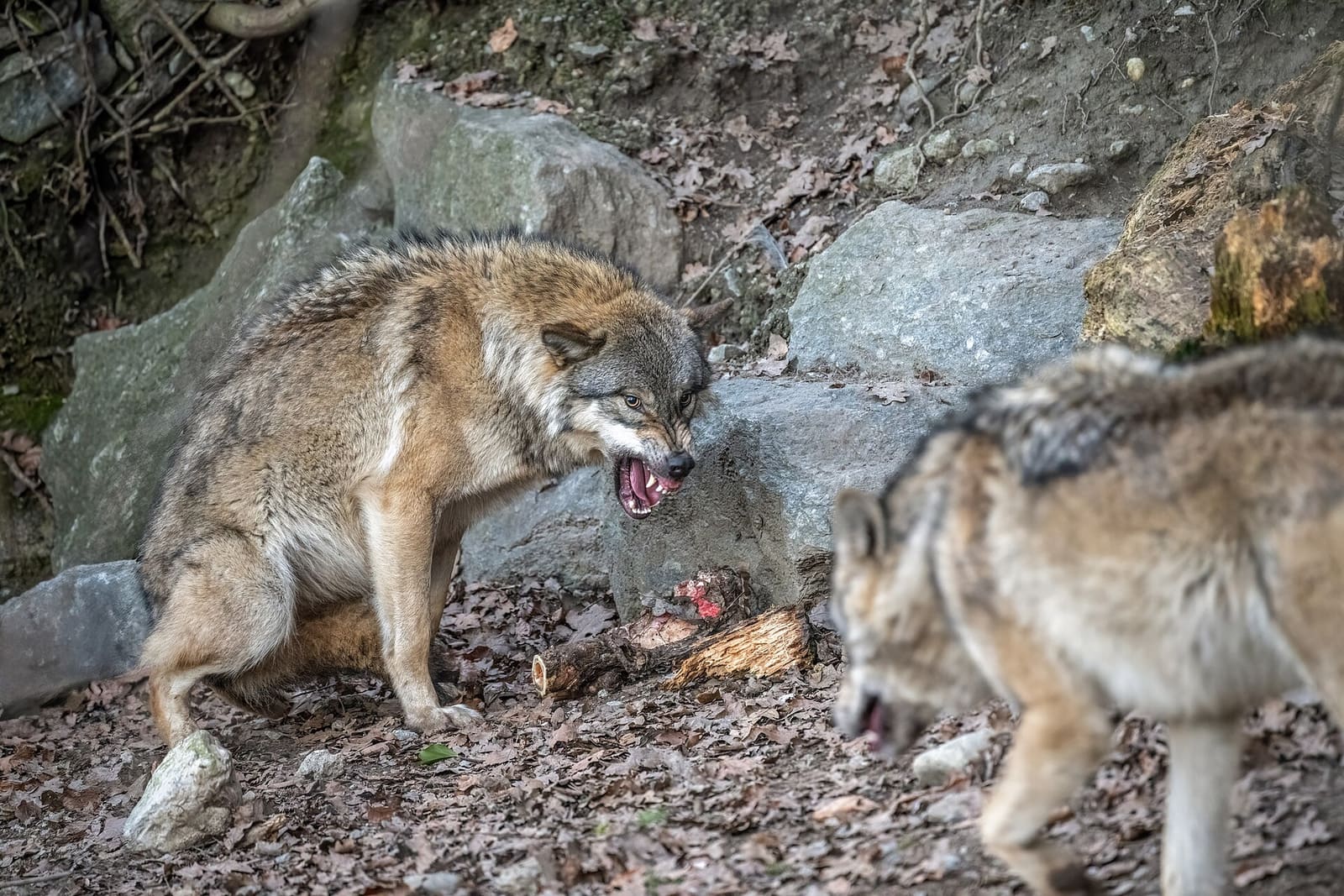
Many people spend years walking through wolf country without ever seeing one. It is an elusive animal that detects humans long before it is seen and usually moves away. If you are ever lucky enough to cross paths with one, the encounter will most likely last only a few seconds.
Even so, it is worth knowing how to act. Not because the risk is high, but because behaving well protects both of you: you and the animal.
What the data says
Studies reviewing wolf attacks on people in Europe and North America agree that they are extremely rare. The few documented cases are mainly linked to:
- Wolves habituated to humans, usually because someone has fed them.
- Animals with rabies, a disease eradicated or very rare in much of Western Europe.
- Situations of provocation or cornering.
If you see a wolf in the distance
- Stop and enjoy it, without trying to get closer.
- Do not follow it to get a better photo. Use your zoom.
- If it is calm and far away, carry on as normal or wait for it to move off.
- Do not share precise locations of wolves, especially of breeding areas, on social media.
If the wolf is close or approaching
- Stay calm and do not run: fleeing can trigger the chase instinct of many predators.
- Make yourself noticed: speak loudly and firmly, raise your arms or poles to look bigger.
- Back away slowly, facing the animal or side-on, without abruptly turning your back.
- If it keeps coming closer: shout, clap, bang your poles together and, if necessary, throw stones or sticks in its direction.
- If you are in a group, stay together.
The key is not to behave like prey: do not run, do not hide, do not crouch.
If you are with a dog
In practice, this is the most delicate scenario. Wolves may see an off-lead dog as a competitor or intruder in their territory, especially during the breeding season.
- Keep your dog on a lead in areas with wolves.
- If a wolf appears, bring your dog close and do not let it give chase.
- Do not put your body between two animals facing off.
Near livestock
Many mountain areas have livestock guardian dogs (mastiffs, for example). They are not wolves, but you should know how to deal with them: pass the flock at a distance, without running, with your own dog on a lead, and do not threaten them with your poles.
What you must never do
- Feed a wolf (or leave food scraps): it is the main reason they lose their fear of humans.
- Approach cubs or a breeding area.
- Corner the animal without leaving it an escape route.
Report what you see
If you see a wolf behaving strangely (for example, showing no fear at all, repeatedly approaching people or appearing sick), report it to the wildlife rangers or emergency services (112 in Europe). Your observation can help manage the situation properly.
The wolf is a keystone species in ecosystems and its management sparks intense debate. If you are interested in the context, read what has changed in wolf protection in Europe. And if your route is in bear country, also see what to do if you meet a bear.
Frequently asked questions
Is it dangerous to hike in areas with wolves?
The risk is very low. Wolves tend to avoid people and attacks by healthy wolves are exceptional. The biggest risk is usually off-lead dogs, which may be seen as intruders or competitors.
Should I throw stones if it comes closer?
If a wolf keeps approaching, making yourself big, shouting firmly and, as a last resort, throwing objects towards it (not necessarily to hit it) is usually enough to make it retreat. Never run away.
Sources and references
- Large Carnivore Initiative for Europe (LCIE)
- Spanish Ministry for the Ecological Transition (MITECO) – Wolf
- U.S. National Park Service – Wolves
This is original editorial content based on the sources cited. Spotted a mistake? Let us know and we will fix it under our corrections policy.