How to tell if a storm is coming while you are on a hike (and what to do)
Summer storms in the mountains form quickly, but they give warning. We show you how to read the clouds, calculate the distance of lightning and get to the least exposed spot if it reaches you.
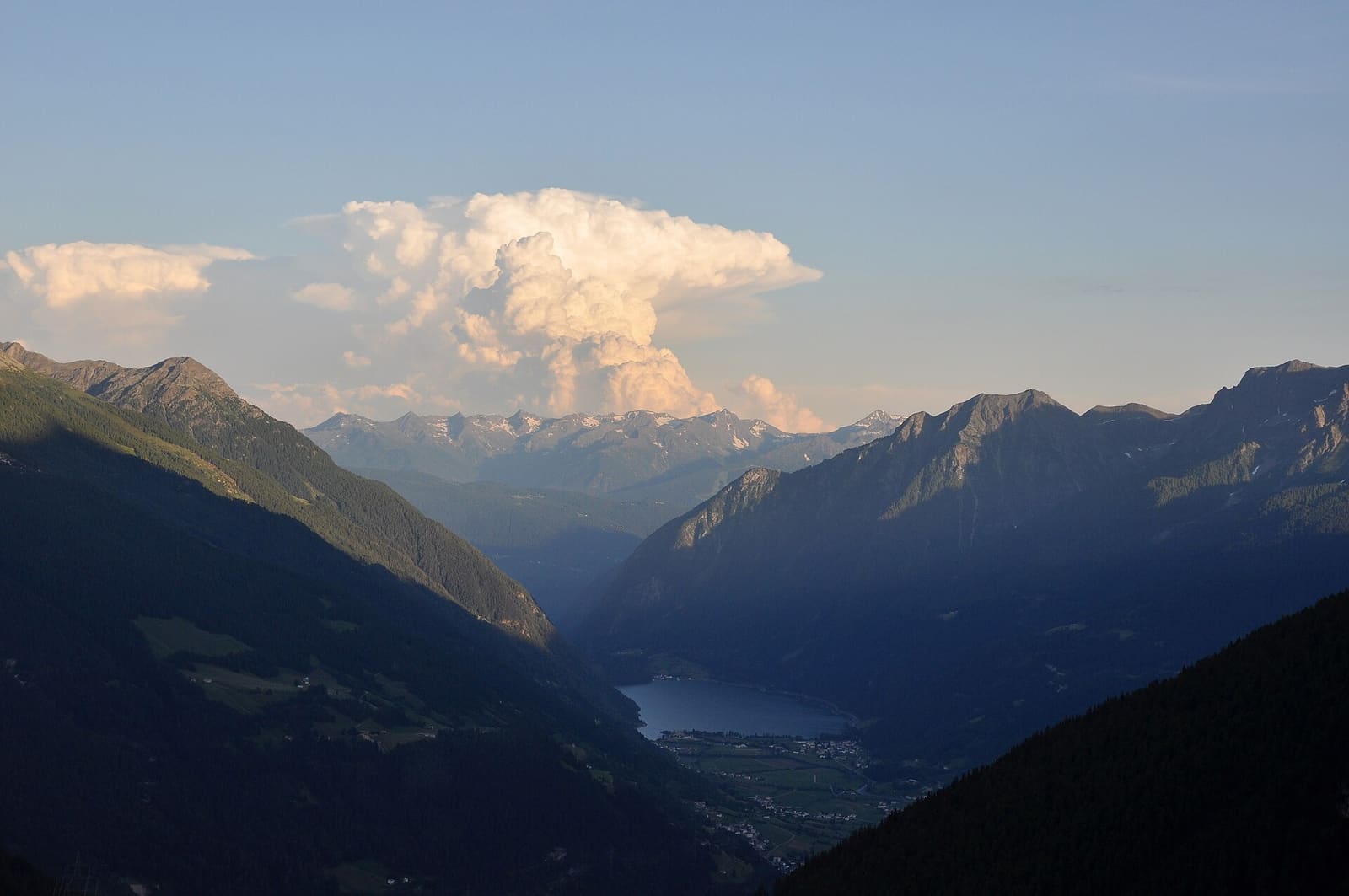
In summer, many mountain mornings start with a flawless sky and end with hail, wind and lightning. Convective storms form when the sun heats the slopes, moist air rises and condenses into clouds that grow vertically until they become cumulonimbus. It is a fast process, but not instant: it almost always gives signs.
Prevention: you avoid the storm at home
- Check the mountain forecast from the official weather service and pay attention to the probability of storms and any warnings.
- Start early. In summer, most mountain storms form from midday or early afternoon. Plan to be back, or at least off exposed ground, before then.
- Choose routes with escape options if the forecast is unstable.
- Set a cut-off time for summits.
The signs that a storm is coming
- Cumulus clouds growing vertically during the morning, cauliflower-shaped with ever darker bases.
- Anvil-shaped clouds at the top: a mature cumulonimbus.
- The sky darkening quickly in one direction.
- Sudden wind changes, often with cold gusts coming down from the cloud.
- A sudden drop in temperature.
- Distant thunder. If you can hear it, lightning can already reach you.
- Buzzing in metal objects or hair standing on end: signs of electrical charge in the air. Act immediately.
The 30-second rule
Sound travels at about 340 metres per second. Count the seconds between the flash and the thunder:
| Seconds | Approximate distance |
|---|---|
| 3 s | 1 km |
| 15 s | 5 km |
| 30 s | 10 km |
If the gap is 30 seconds or less, the storm is about 10 km away or closer: you are within lightning range and must seek protection. Many strikes land ahead of the cloud, even with blue sky above you.
If you can hear thunder, you are close enough to be struck by lightning.
What to do if it catches you
Stay away from:
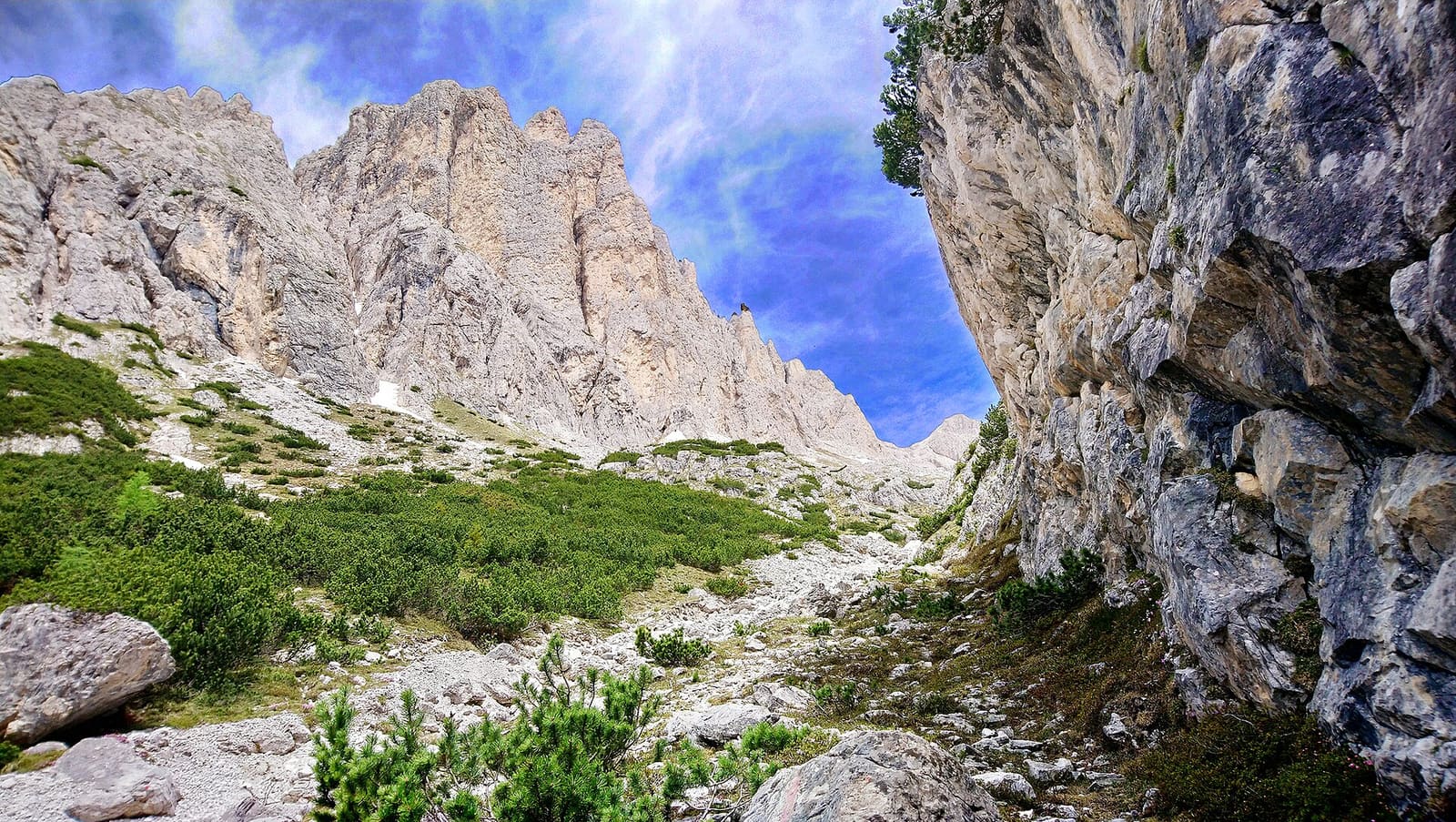
- Summits, ridges, passes and any high or prominent point.
- Isolated trees and poles.
- Water (lakes, rivers, ponds) and waterlogged ground.
- Cables, via ferratas, railings and other long metal features.
- Cave mouths and shallow overhangs.
Look for:
- Low, relatively even ground, without being the highest point around.
- A dense forest of trees of similar height is better than an isolated tree.
If the storm is overhead and there is no shelter:
- Crouch down with your feet together, on your backpack or a mat if you have one (with no metal parts), and your head down.
- Do not lie down on the ground.
- Spread the group out several metres apart so a single strike does not affect everyone.
- Put down poles and ice axes.
After the storm
- Wait about 30 minutes after the last thunder before returning to exposed areas.
- Watch the terrain: wet rock, mud, piled-up hail and flash floods in gullies and streams.
- Check whether anyone in the group is cold: the combination of rain, wind and falling temperatures can cause hypothermia even in summer. That is why it is key to dress in layers.
If someone is struck by lightning
Call emergency services (112 in Europe) immediately. People struck by lightning do not retain an electrical charge and can be touched safely. If they are not breathing, start CPR if you know how. First aid can save lives: training in it is one of the best investments any mountaineer can make.
Frequently asked questions
Is it dangerous to shelter in a cave during a storm?
A deep cave can protect you, but the entrance and shallow caves do not: lightning current can jump across the gap. If you go in, stay well away from the mouth and the walls, without touching the rock.
Does carrying a phone attract lightning?
No. Small objects do not attract lightning. What is dangerous is your position: being on a high or exposed point. You should, however, move away from long metal features such as cables or via ferratas.
Sources and references
- AEMET – Mountain forecasts and warnings
- National Weather Service (NOAA) – Lightning Safety
- FEDME – Mountain safety
This is original editorial content based on the sources cited. Spotted a mistake? Let us know and we will fix it under our corrections policy.