Santander lets its park grass grow and butterflies double: 22 species versus 10
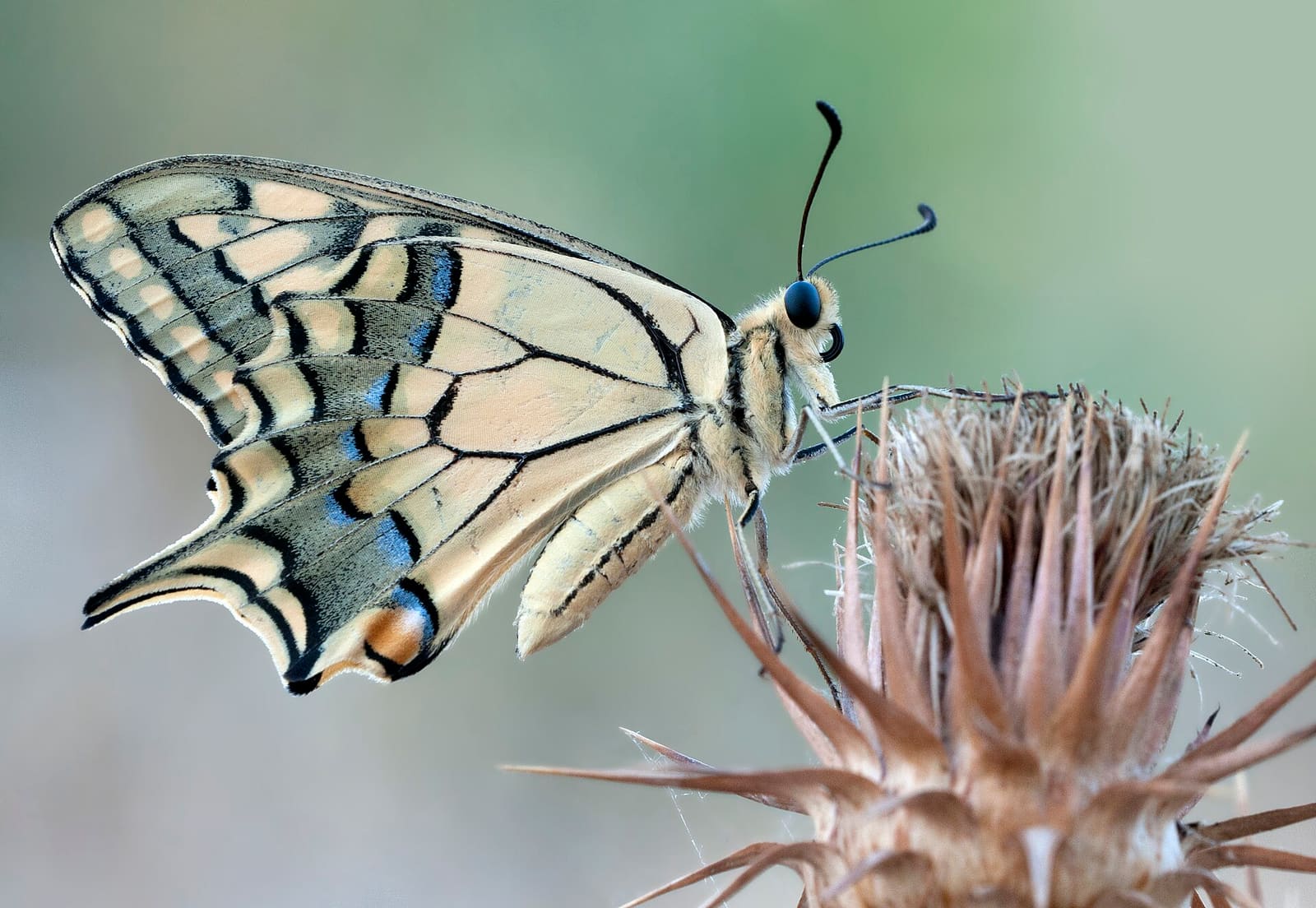
For three years, SEO/BirdLife staff walked mown and unmown areas of the same parks. Where the grass grows there are flowers, and where there are flowers there are butterflies like the swallowtail.
What happens when a city stops mowing some corners of its parks? Santander, on Spain’s north coast, has the answer: butterflies double. Monitoring by SEO/BirdLife within the Santander Capital Natural project counted 22 species in unmown grass, compared with just 10 on mown lawns.
How it was done
For three years, staff walked five city parks: Parque 2020, Mataleñas, Las Llamas, La Remonta and La Vaca.
- In each, they walked 15 minutes through a mown area and 15 through an unmown one.
- They used the BMS (Butterfly Monitoring Scheme), Europe’s standard butterfly-counting method.
- Comparing areas within the same park means soil, climate and foot traffic are similar, so the difference comes mainly from mowing.
The results
| Area | Butterfly species |
|---|---|
| Unmown grass | 22 |
| Mown lawn | 10 |
Three species appeared only in long grass, including the swallowtail. The reason is simple: butterflies feed on flower nectar, and a freshly cut lawn barely flowers.
Letting the grass grow is “a small concession of space by citizens to nature,” says Blanca Serrano of SEO/BirdLife.
Years in the making
Santander has been mowing some green spaces less for more than a decade and has sown flower meadows in parks and roundabouts. The city’s butterfly guide lists 34 day-flying species, and residents have recorded 28 on iNaturalist.
The study has limits: it counts species, not individuals, and hasn’t been published in a scientific journal. But the idea works in any garden: leave a corner unmown and see what arrives.
Sources and references
This is original editorial content based on the sources cited. Spotted a mistake? Let us know and we will fix it under our corrections policy.