Climbing grades explained: from 4 to 9c and how the scales compare
6a, VII, 5.11d, V5... Every country and every type of climbing has its own difficulty system. We explain how they work, how they compare and why a grade is never an exact science.
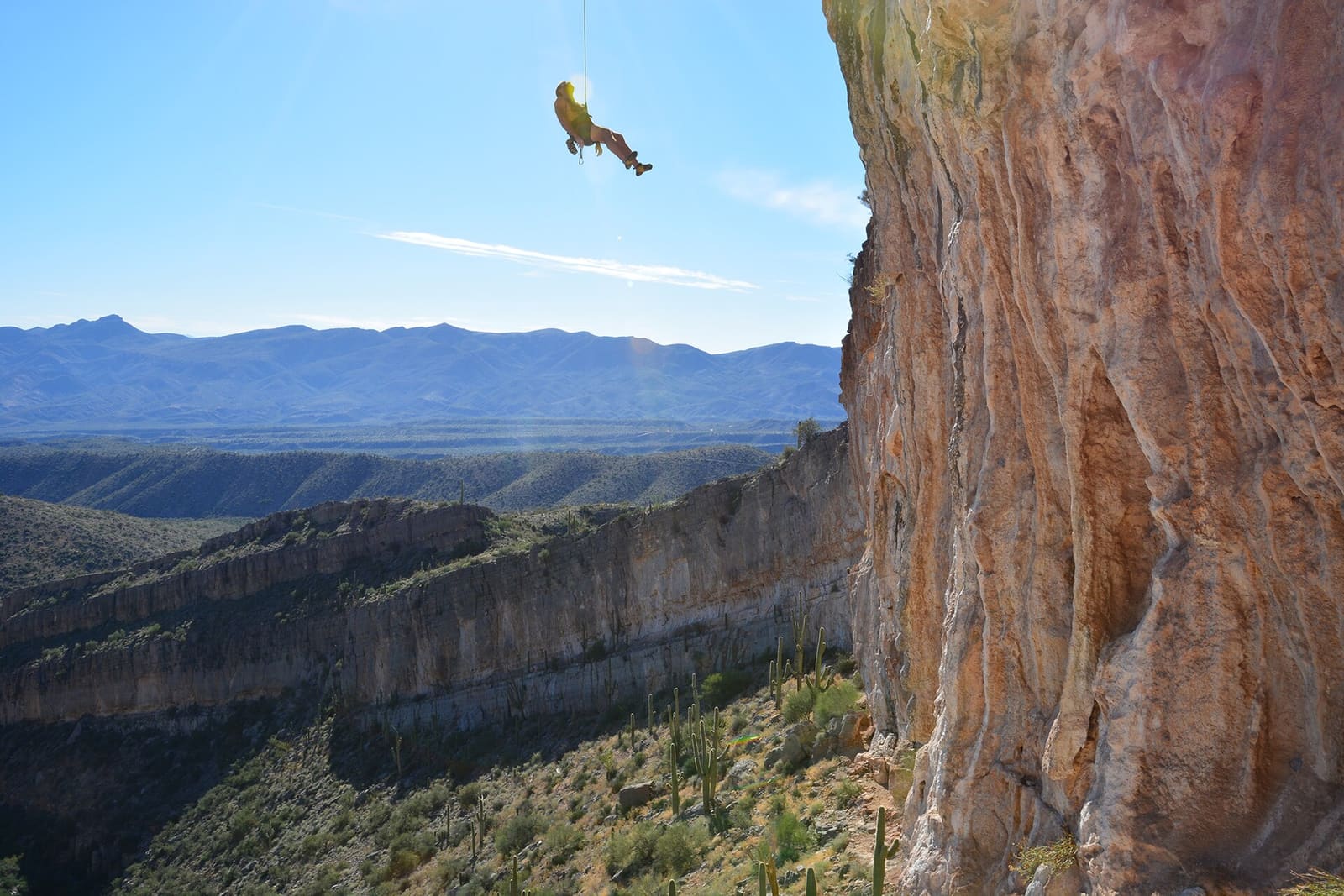
If you open a climbing guidebook for the first time, you will see numbers, letters and symbols that look like a secret code: 6a+, V+, 7b, 5.10c. They are difficulty grades, and although each country has its own tradition, the logic is the same: the higher, the harder.
What a grade measures
A grade tries to sum up in a single number:
- The difficulty of the hardest move on the route (the “crux”).
- How sustained it is: whether the route is hard all the way or only at one point.
- Sometimes the style (slab, overhang, crack) affects how it feels.
What the sport scale does not measure is commitment or danger: rock quality, the distance between bolts or how hard it is to retreat. Other notations exist for that in trad and mountain climbing.
The main scales
French scale (sport)
The most widely used in Europe and much of the world for bolted routes. It goes from 3 to 9c, with subdivisions a, b, c and a + sign (for example 6a, 6a+, 6b…).
UIAA
Common in Germany, Austria and in Central European alpine climbing. It uses Roman numerals from I to XII, with + and –.
YDS (Yosemite Decimal System)
The United States scale. Actual climbing routes go from 5.0 to 5.15, and from 5.10 upwards they are subdivided into a, b, c, d.
Bouldering
For short problems without a rope, the V scale (V0 to V17) and the Fontainebleau scale (3 to 9A) are used, the latter with capital letters so it is not confused with the French route scale.
Approximate conversion chart
| French | UIAA | YDS (USA) |
|---|---|---|
| 5c | VI | 5.9 |
| 6a | VI+ | 5.10a |
| 6b | VII | 5.10c-d |
| 6c | VII+ | 5.11a-b |
| 7a | VIII | 5.11d |
| 7b | VIII+ | 5.12b |
| 7c | IX– | 5.12d |
| 8a | IX+/X– | 5.13b |
| 8b | X | 5.13d |
| 8c | X+ | 5.14b |
| 9a | XI | 5.14d |
| 9b | XI+ | 5.15b |
| 9c | XII | 5.15d |
Conversions are approximate: a 7a at one crag can feel very different from a 7a at another. Climbers call it the “local grade”.
Who decides the grade?
The first climber to send a route proposes a grade. Then those who repeat it confirm or dispute that proposal. Over time a consensus is reached. That is why grades can change, especially on the hardest routes.
The records
- In sport climbing, the highest proposed grade is 9c, with Silence (Flatanger, Norway), sent by Czech climber Adam Ondra in 2017.
- In bouldering, the hardest problems are around Fontainebleau 9A.
- Women climbers have reached the very top levels, with several 9b ascents in the last decade.
Spain plays a leading role in elite sport climbing: areas such as Siurana, Margalef and Oliana host some of the hardest routes in the world.
Where to start?
At a climbing gym or an introductory course, the first days are usually spent on routes graded 4 to 5. Getting past 6a is considered a good recreational level. More important than the grade is learning properly:
- Knots and belaying, with instructors or at a club.
- Partner checks before every route (harness, knot, belay device).
- Footwork, the great forgotten skill.
- Falling well, progressively and in a controlled way.
Climbing carries risk: learning with qualified instruction is the best investment. And if the vertical world on a grand scale appeals to you, discover why some summits are the most dangerous in the world.
Sources and references
- UIAA – International Climbing and Mountaineering Federation
- FEDME – Climbing
- IFSC – International Federation of Sport Climbing
This is original editorial content based on the sources cited. Spotted a mistake? Let us know and we will fix it under our corrections policy.