World Anteater Day: the giant is returning to places it hadn't been seen for decades
About 110 giant anteaters have been released in Iberá Park. One may have crossed the border into Brazil.
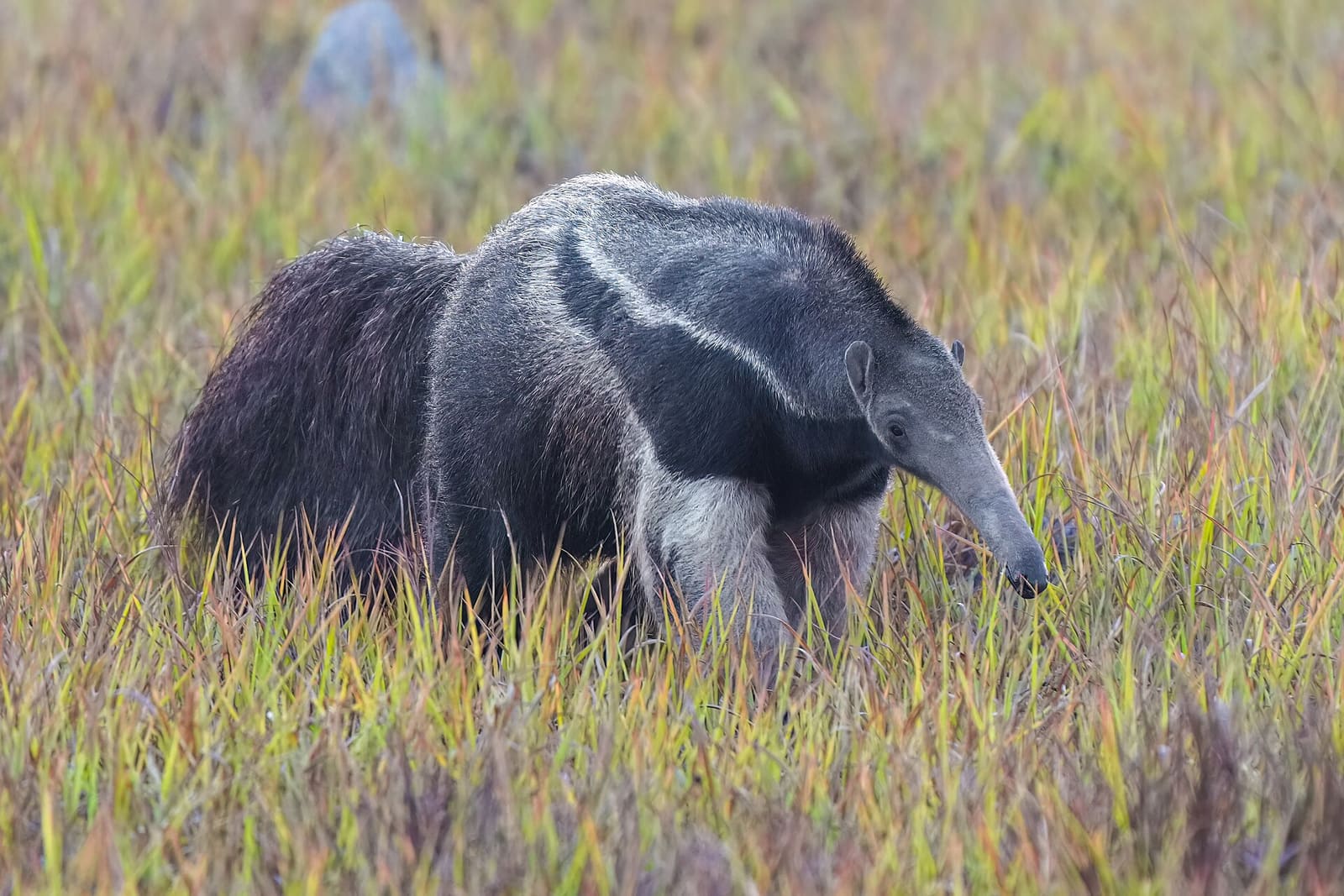
Today, 19 November, is World Anteater Day. And the biggest of them, the giant anteater, has something to celebrate: it is returning to places it had vanished from.
A vulnerable giant
The giant anteater lives on the ground, eats ants and termites with its very long tongue and is a close relative of sloths. It is listed as vulnerable by the IUCN and has disappeared from parts of its range because of habitat destruction and hunting.
Back in the Gran Chaco
In the Alma Guaraní reserve, in Argentina’s Gran Chaco, one turned up in 2025: the first known since 1986. The reserve, about 6,400 hectares, has been restored by volunteers for more than ten years: some areas were replanted and others fenced off to recover on their own.
A network of 20 camera traps showed the anteater spent almost all its time in the areas that regenerated naturally. There, farming had cut ant numbers by 30 to 50%. Experts urge caution: it isn’t yet clear whether this is the start of a recovery or a one-off.
In Brazil, after 130 years
In Espinilho State Park, in southern Brazil, no live one had been seen since 1890. In August 2023 a camera filmed one, followed by eleven more sightings. “We shouted and cried when we saw it,” says researcher Fábio Mazim.
It probably crossed from Iberá Park, in northeastern Argentina, where a rewilding project has released about 110 giant anteaters.
Another species recovering thanks to corridors: the jaguar, with its new map of paths across the Americas.
Sources and references
This is original editorial content based on the sources cited. Spotted a mistake? Let us know and we will fix it under our corrections policy.